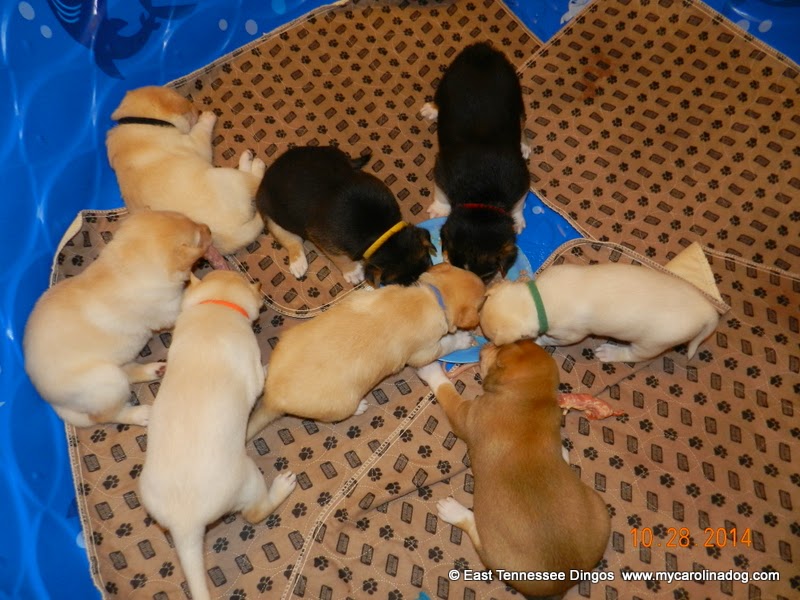
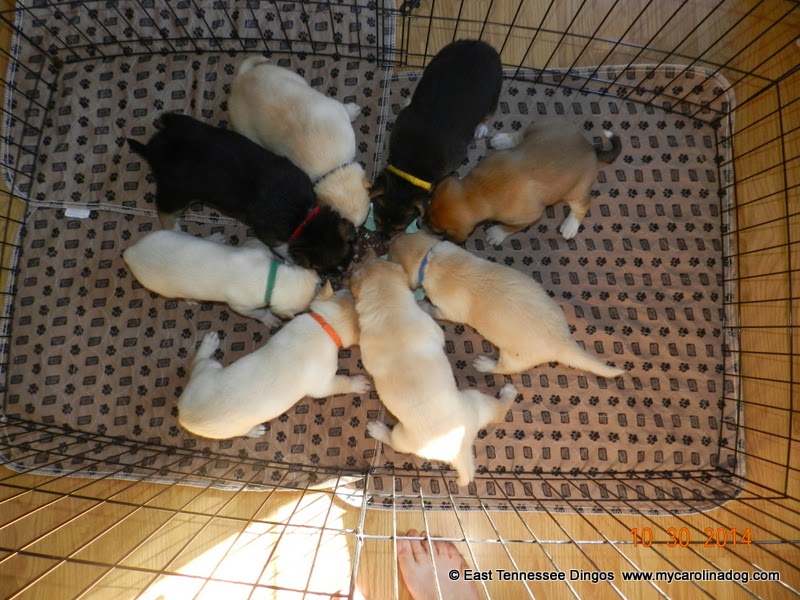
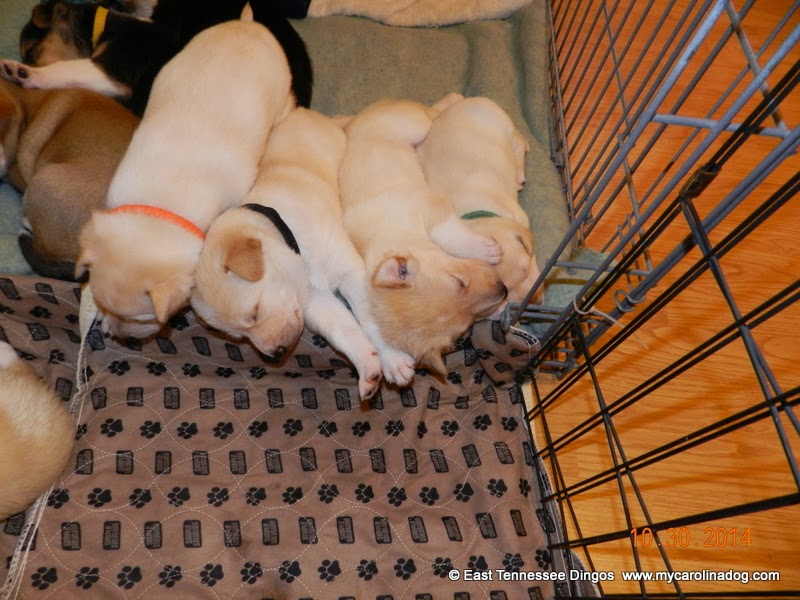
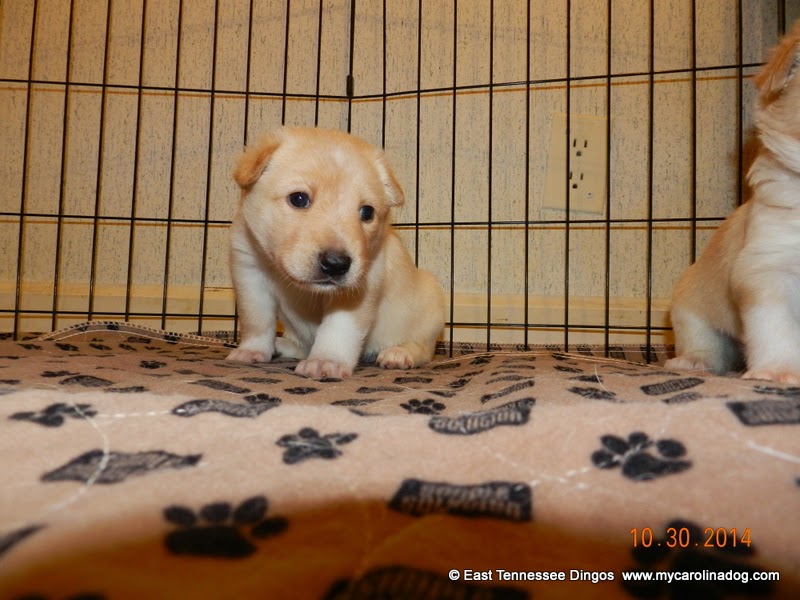
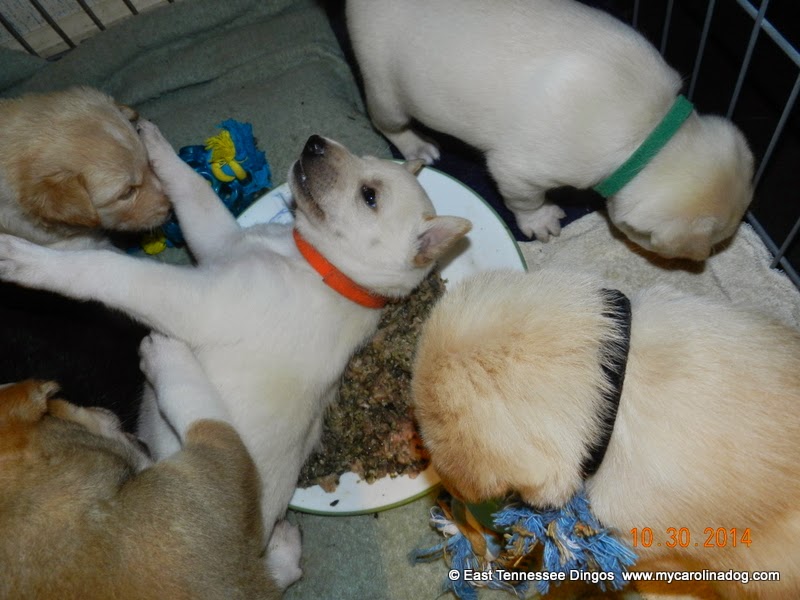
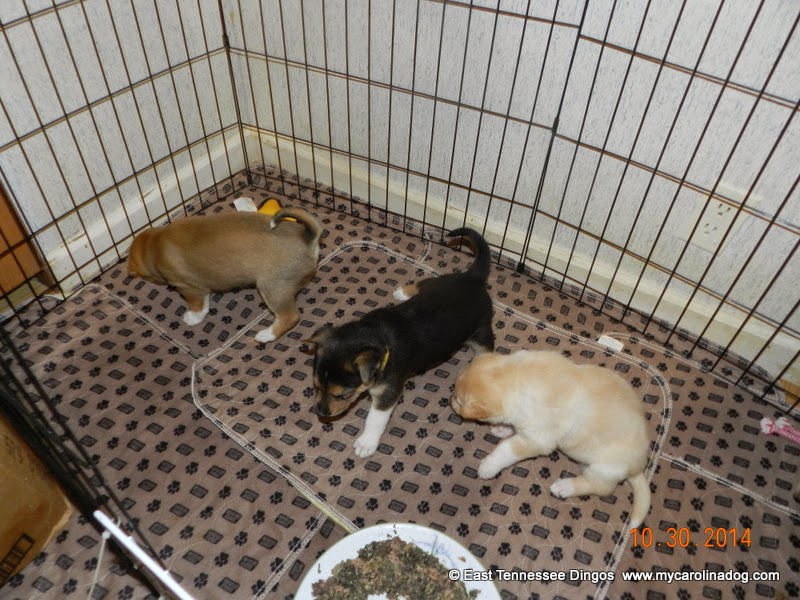
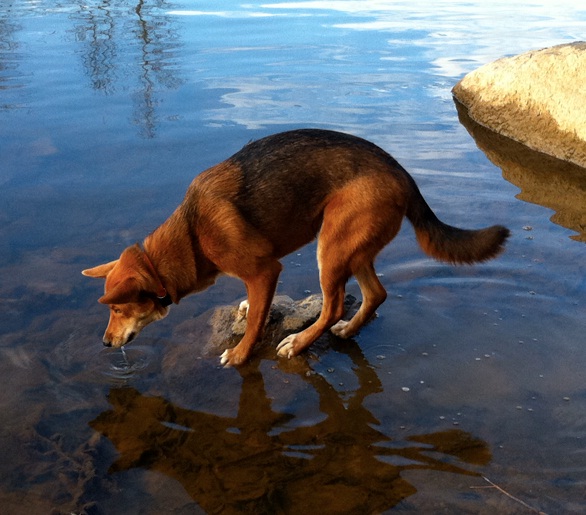
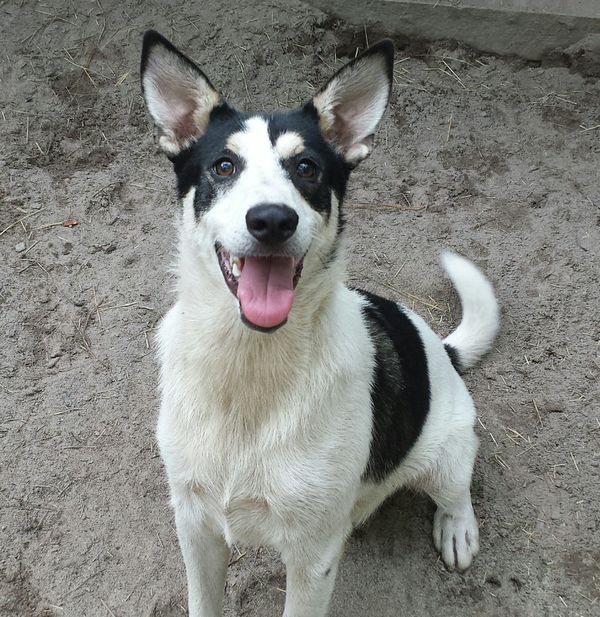
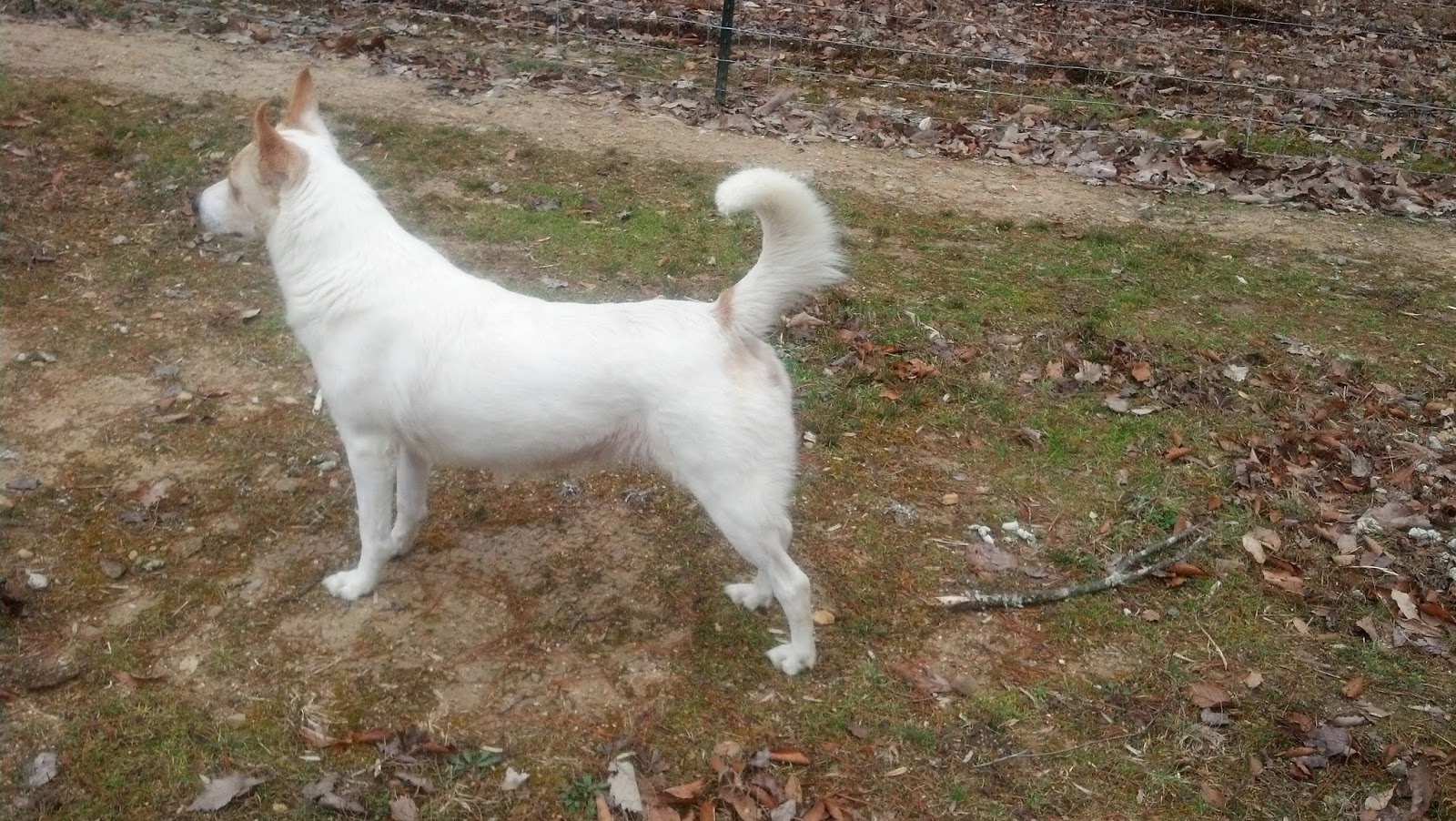
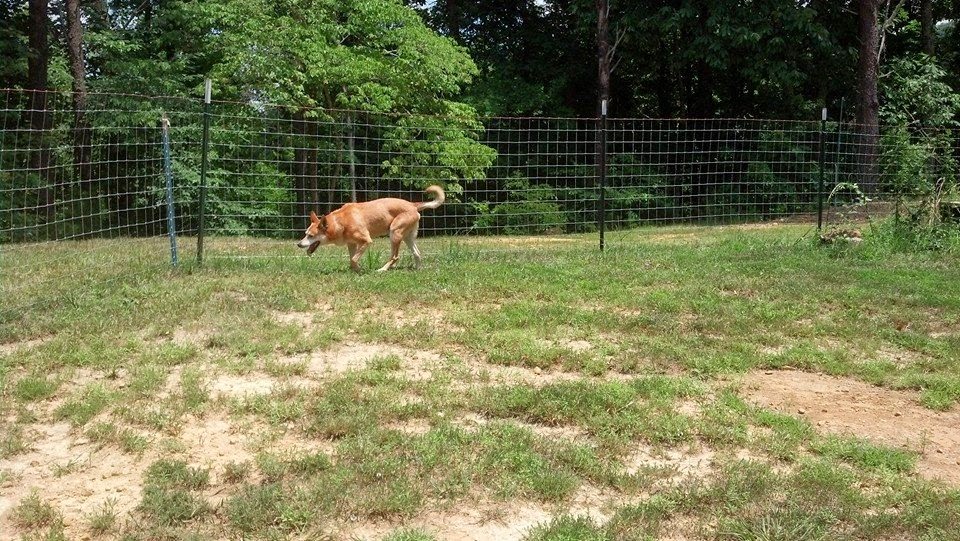
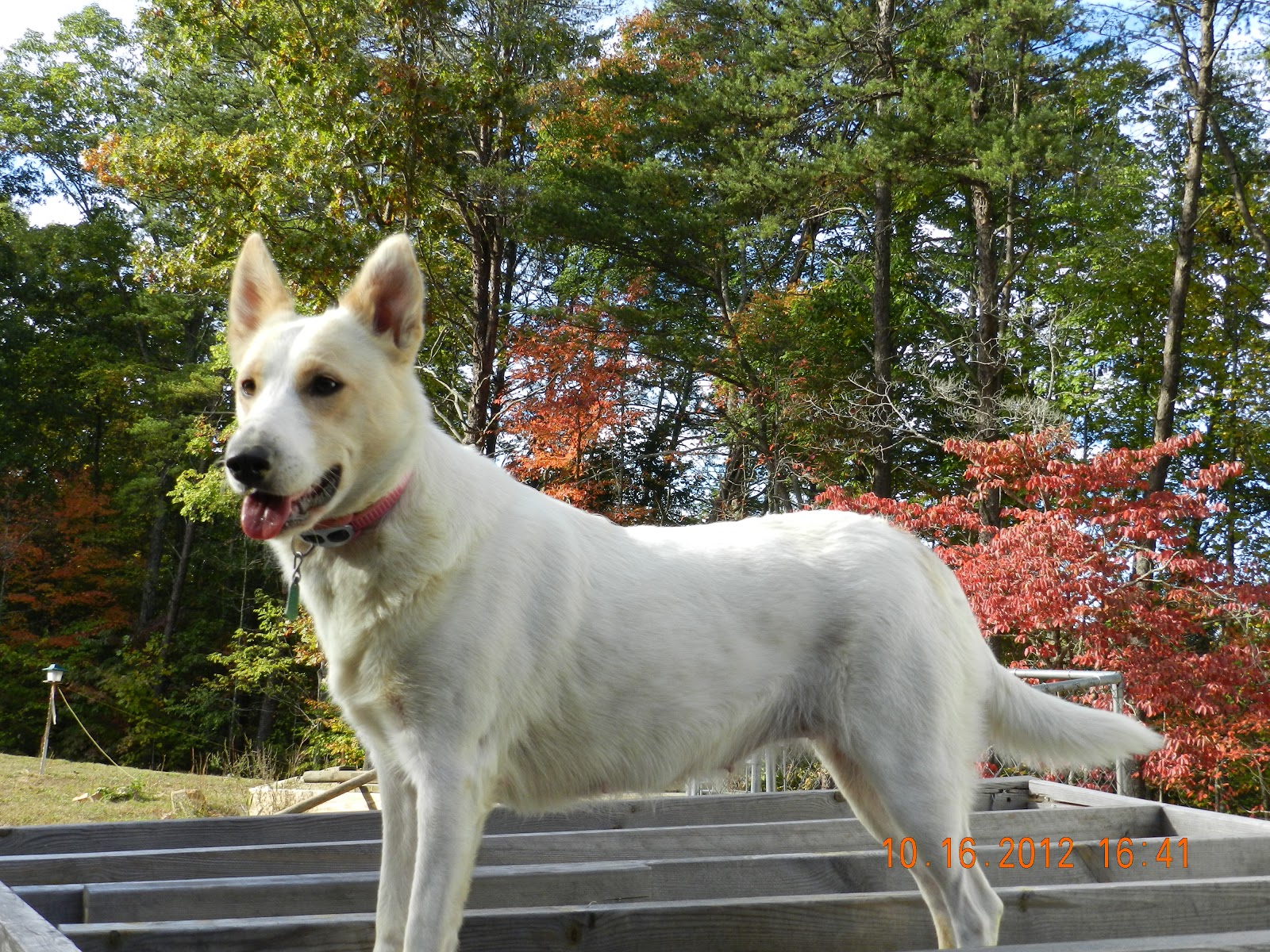
The first Carolina dog that I. Lehr Brisbin took home with him smeared fecal matter all over the back seat of his car. He found her at a pound in Augusta, Georgia in the 1970s, and despite strong discouragement from the pound’s staff (they said she bit everyone who touched her), he managed to wrangle her into a carry crate in his back seat, where “she immediately had a diarrhea attack,” Brisbin recalls. But he was far from discouraged. Brisbin wanted to take her home because he thought there was something strange and special about her. She resembled some wild dogs he’d seen in the woods along the Savannah River. And Brisbin was starting to put together an exciting hypothesis about why there were wild dogs in the South Carolina lowland that looked and acted different from most others.
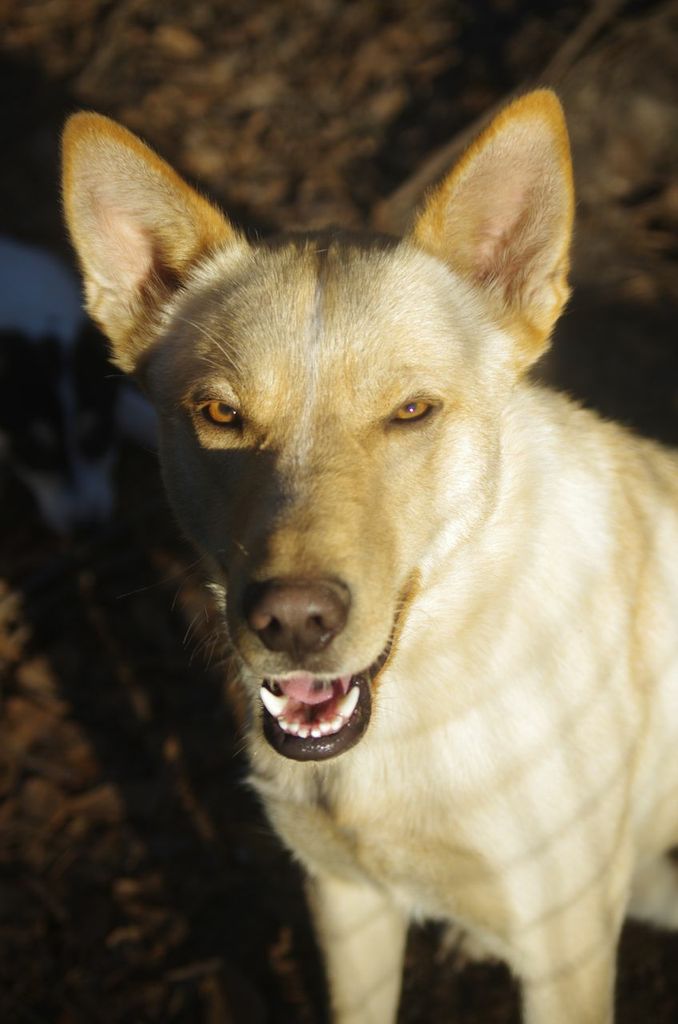
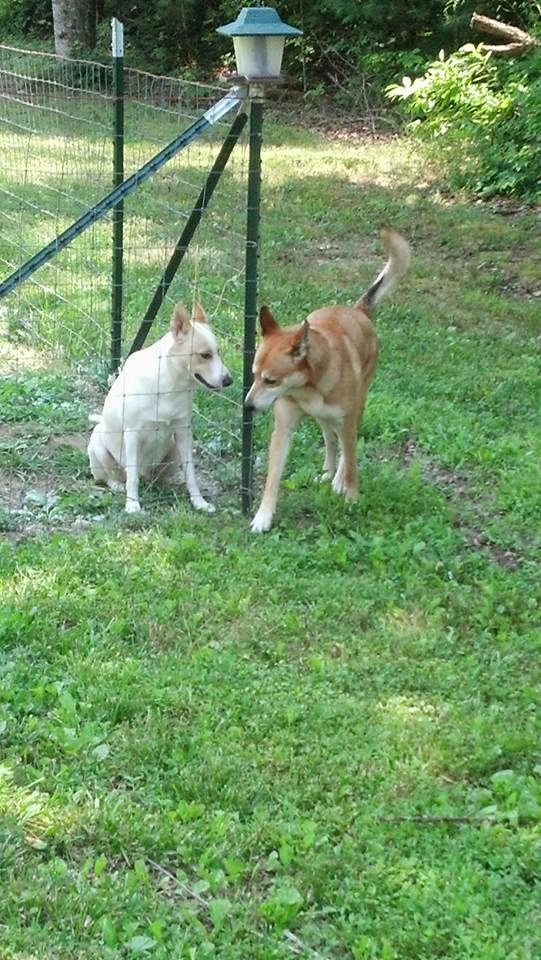
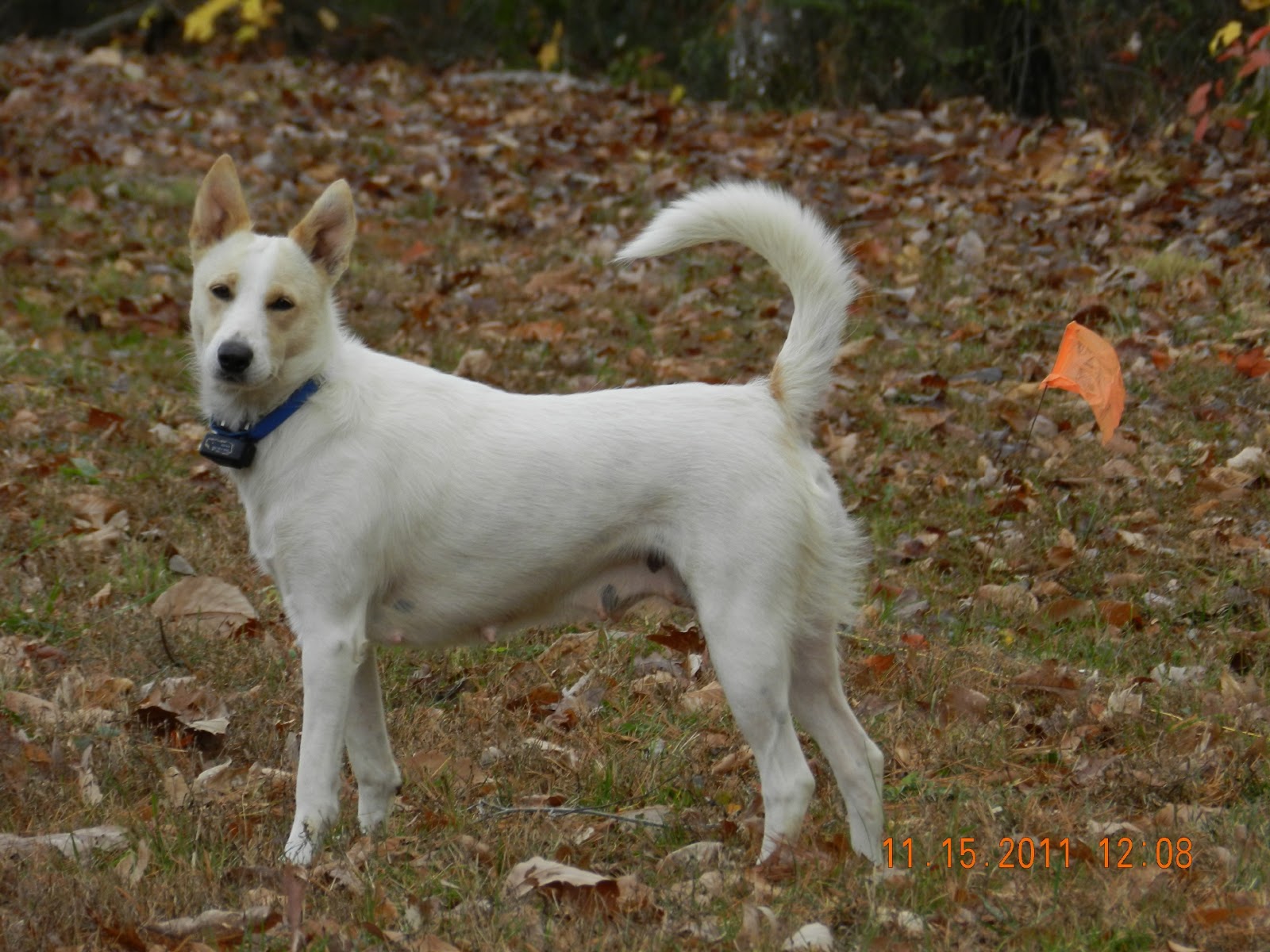
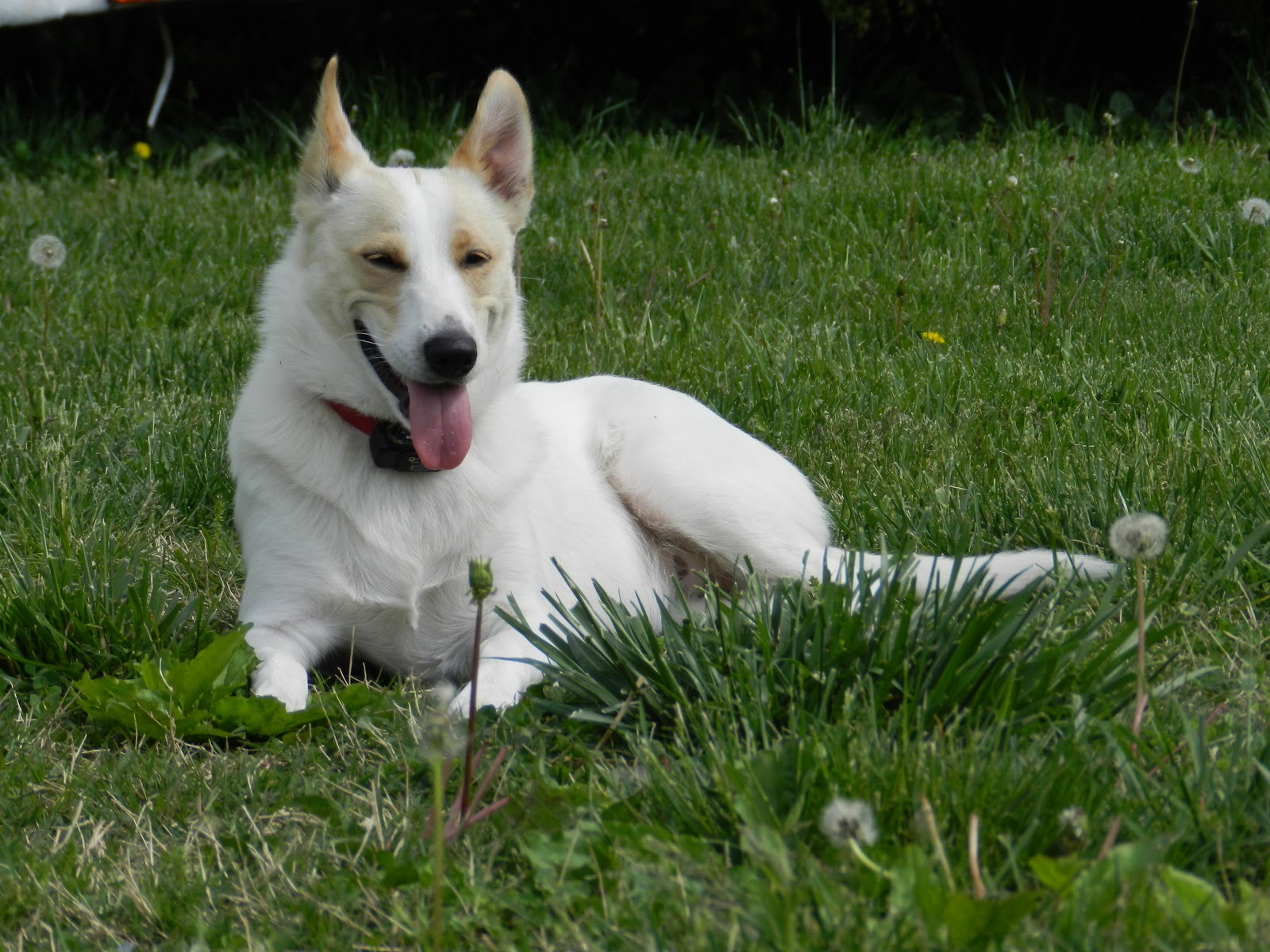
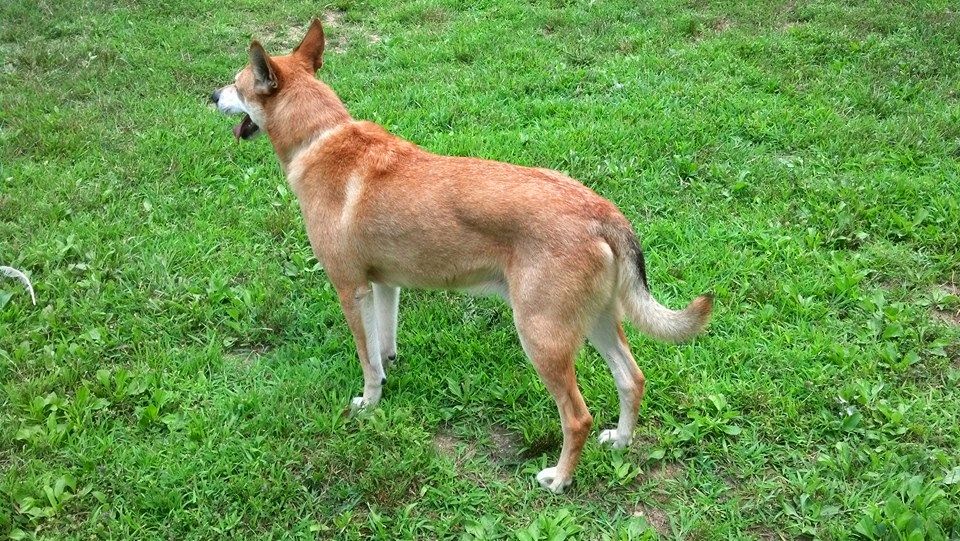
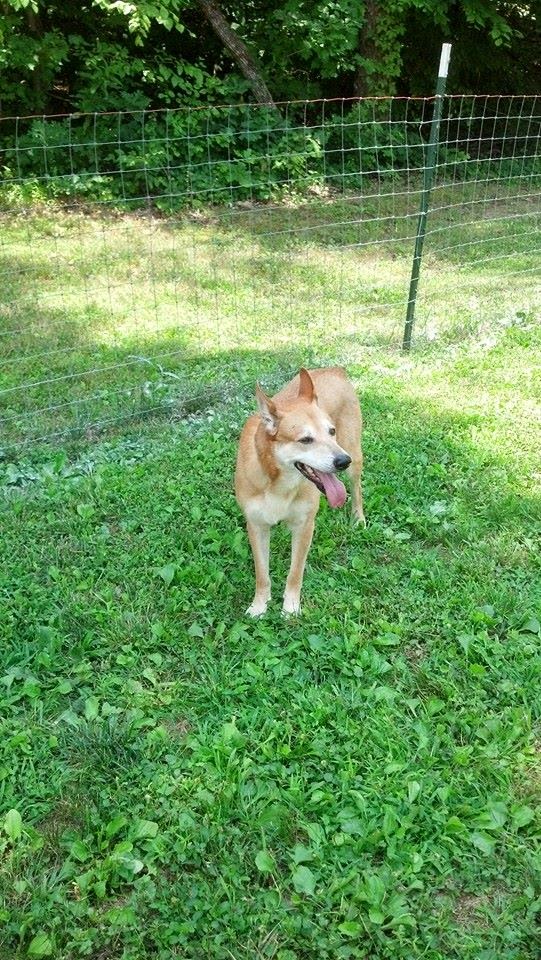
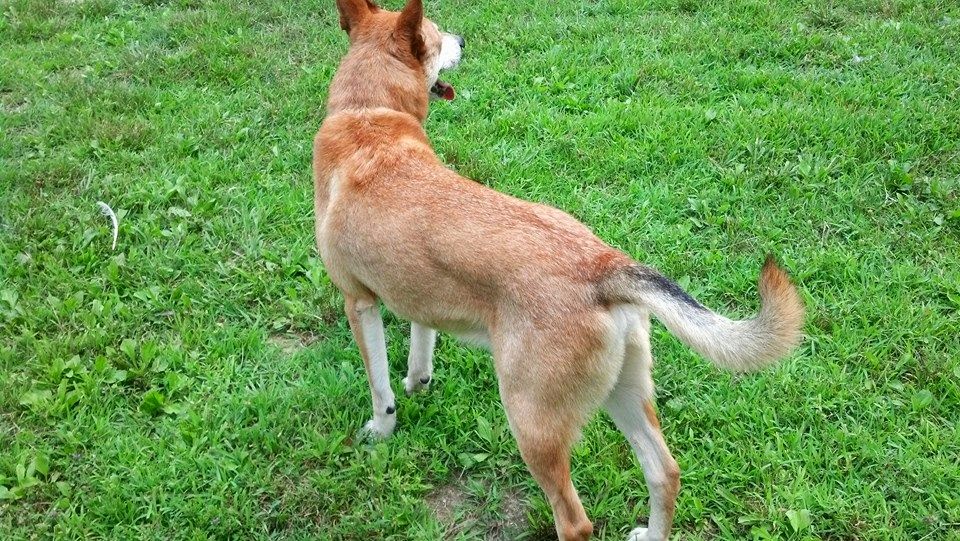
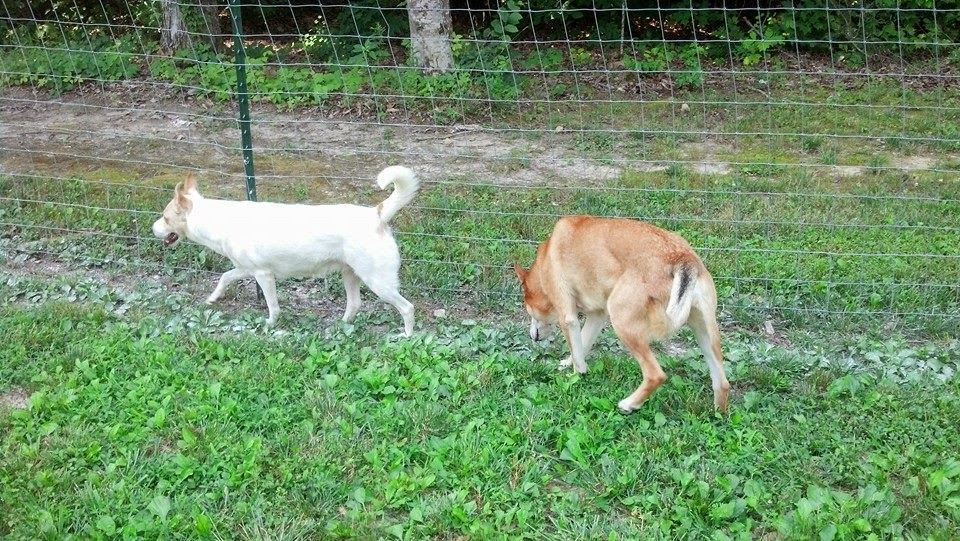
At the time, I. Lehr Brisbin was a biologist studying wildlife at the Savannah River Ecology Lab, a field research station of the University of Georgia in Aiken, South Carolina. His research often took him into the 300 square mile wilderness of the Savannah River Ecology site. That’s where he first noticed the wild dogs. They had long, pointy snouts, ears that permanently stood up and tails that curled back on themselves. And their behavior, he noticed, was unusual, too. They dug small pits in the ground with their snouts. They hunted in packs and signaled to each other by flashing the white undersides of their tails. They moved as a pack, like wolves. They were more like Australian Dingoes than European-bred dogs brought to America by colonists. Brisbin hypothesized that the wild South Carolina dogs descended from canines that belonged to Native Americans, that the dogs’ ancestors had crossed the land bridge between Asia and North America with humans around 12,000 years ago.
Brisbin soon acquired another wild dog that resembled the female he got from the pound. He bred them, and their offspring “were like little dingoes,” he said. He joined the Australian Dingo Society to learn more and was struck by the similarities he saw in their behavior. Brisbin decided to petition the United Kennel Club to get the dogs classified as a breed unto itself. His case convinced the UKC and a new breed was named.
“I created the ‘Carolina dog,’” Brisbin says. “And I based it on three things: First of all, what do you look like; second is how to do you behave; and third, where did you come from. Every one of those dogs traced back to the swamp dogs.”
Brisbin thought that the distinct morphology and behavior were strong indicators of a difference in origin from most domestic dogs in America, whose lineage can be traced to dogs brought over from Europe. The main question he wanted to answer was: are these dogs feral escapees with European origins? Or are they actually remnants of an ancient Native American dog population?
“We actually have a tool to find out,” Brisbin says. “It’s called DNA.”
Fast forward almost 40 years and a group of scientists from the Royal Institute of Technology in Sweden has subjected that hypothesis to a new level of scrutiny by analyzing DNA from 19 Carolina dogs and comparing it to other breeds. While Brisbin and other biologists have looked at the DNA of the Carolina dog before
, the new study, whose results were published in Proceedings of the Royal Society B, is the first to compare Carolina dog DNA to a range of other breeds from North America and Asia to see which they most closely resemble genetically.
The researchers found that the mitochondrial DNA (which is passed down through females) of the Carolina dogs is most closely related to the mitochondrial DNA of dogs found in Asia, and they suggest, based on that evidence, that the Carolina dog “may have an indigenous American origin.” The key word there is “may.”
For enthusiastic Carolina dog owners and others following the story (a recent New York Times article about the findings was titled “
DNA Backs Lore on Pre-Columbian Dogs”), these findings have been taken as strong evidence of native American dog. But some scientists who study canid diversity aren’t as quick to accept the study as proof of the dog’s American origin.
“I don’t think they really have enough evidence to support that,” says Ben Sacks, a professor at the University of California-Davis who studies dog genetics. “I think they have some circumstantial evidence that suggests that that’s a possibility.”
Sacks says that the work is exciting, but there’s still a long way to go to determine the origin of the Carolina dog.
“It’s a neat story, and maybe it is a remnant [American] population, but even if that’s the case, the odds that they've been able to retain their genetic integrity for the last five to six thousand years while being surrounded by European dogs and haven’t interbred is not impossible but would certainly be remarkable.”
Sacks also points out that the authors of the paper looked at only mitochondrial DNA (mtDNA), one piece of an animal’s genetic makeup. Although they compared it with the mtDNA of other dogs around the world, Sacks explains that “the problem is, the similarity of mtDNA sequences doesn’t take you that far,” meaning that because of the way mtDNA mutates over time, it’s difficult to determine a relationship based on similar mtDNA sequences.
While Sacks is quick to admit that the work is exciting, he says comparing the entire genome of the Carolina dog to others will provide a fuller picture of its history and relationship to other dogs.
The paper’s lead author, Peter Savolainen, agrees that more work needs to be done. “I think we have a very strong indication, but it needs ‘final confirmation,’” he writes.
"I think we have a very strong indication, but it needs final confirmation." - Peter Savolainen
Even Brisbin, who would like very much to be able to say with certainty that the dogs have been in America since before Columbus, agrees that the genetic work is not quite where it needs to be to declare the Carolina dog indigenous.
“The evidence isn’t there yet, but it’s very exciting,” he says. He stands by his hypothesis and uses other clues –like Native American cave paintings that depict dogs similar to the Carolina dog and accounts from early European explorers in American who describe a dog like the Carolina dog—to give weight to his hypothesis as well.
It has been nearly 40 years since Brisbin first noticed the strange dogs in the swampy South Carolina forest. He is officially retired, but his interest in Carolina dogs and other wildlife hasn’t waned a bit. In his spare time he raises Pitt bulls and researches the ancestry of the domesticated chicken; he testifies in court about dogs’ ability to track scent; he sometimes raises blood hounds for the local police department. And he still breeds Carolina dogs. Brisbin wants—possibly more than anyone—to see strong evidence for his hypothesis. But he’s still waiting for the study that can provide it.
“The new paper is exciting,” he says. “But other questions must be answered first.”