About Nature's Way Carolina Dogs

My photo
Seymour, Tennessee, United States
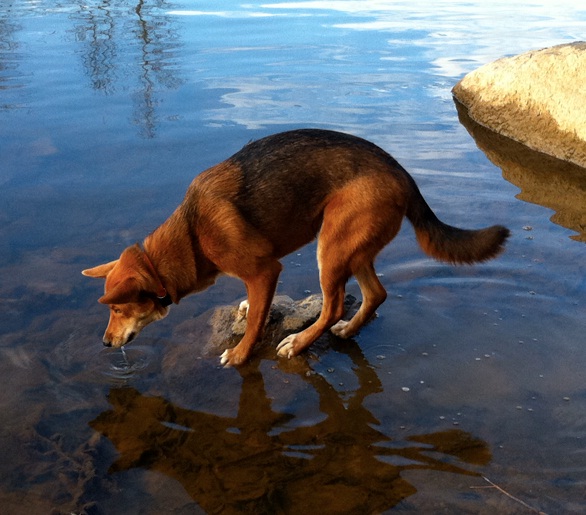
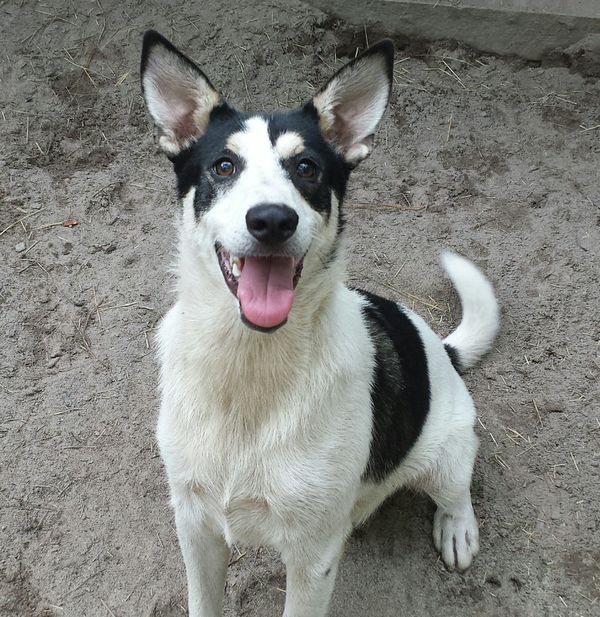
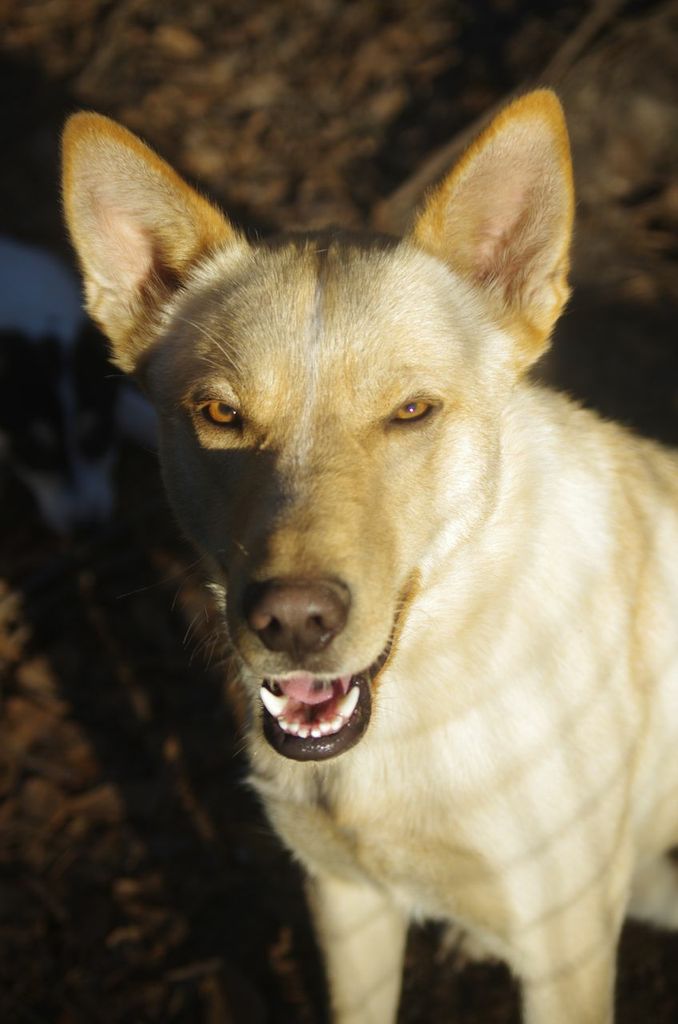
Welcome to my site about my Naturally Reared Carolina Dogs! Carolina Dogs are a relatively new, rare breed recognized by the UKC, AKC-FSS & ARBA, and are quite possibly America's own indigenous wild dog. CDs make wonderful companions, athletes, hunters, and bedwarmers! Natural Rearing is the philosophy wherein we raise our dogs and puppies by following the 8 Laws of Health, employing Biologically Appropriate Raw Food and no toxic chemicals on, in or around our dogs. We have found this way of life fosters balance, health and longevity in our beloved companions. For our puppies, we welcome homes that have a very similar philosophy about dog rearing, or wish to learn. Check us out, follow us and share us in other places!!! YouTube@ Susan NaturesWayCarolina Dogs NaturesWayPets and FaceBook @ https://www.facebook.com/mycarolinadog on Twitter @https://twitter.com/NaturesWayCDs Thank you so much for visiting our site, feel free to leave us a comment or send us an email! susanlewelling@yahoo.com
Showing posts with label American. Show all posts

Monday, October 6, 2014

Litter Birth Announcement

We are proud to announce the birth of our newest litter of
 Naturally Reared Carolina Dogs to
 "PR" Banbury's Tennessee Daisy Jane, aka Daisy &
 Walnuthill Eliphalet Remington, aka Eli
There is 6 males and 2 females for a total of 8 puppies. 

A couple of males will be available to Natural Rearing homes, 
please see THIS PAGE  for more information about obtaining an ETD puppy! 


Tuesday, September 16, 2014

Is The Carolina Dog Native To North America? New Science Says: Maybe

Is The Carolina Dog Native To North America? New Science Says: Maybe

Pittsboro resident Marielle Hare owns a dog, Oona, that she believes might have traces of Carolina Dog in her. She is interested in testing its DNA.
Credit Marielle Hare
The first Carolina dog that I. Lehr Brisbin took home with him smeared fecal matter all over the back seat of his car. He found her at a pound in Augusta, Georgia in the 1970s, and despite strong discouragement from the pound’s staff (they said she bit everyone who touched her), he managed to wrangle her into a carry crate in his back seat, where “she immediately had a diarrhea attack,” Brisbin recalls. But he was far from discouraged.  Brisbin wanted to take her home because he thought there was something strange and special about her. She resembled some wild dogs he’d seen in the woods along the Savannah River. And Brisbin was starting to put together an exciting hypothesis about why there were wild dogs in the South Carolina lowland that looked and acted different from most others.
At the time, I. Lehr Brisbin was a biologist studying wildlife at the Savannah River Ecology Lab, a field research station of the University of Georgia in Aiken, South Carolina. His research often took him into the 300 square mile wilderness of the Savannah River Ecology site. That’s where he first noticed the wild dogs.  They had long, pointy snouts, ears that permanently stood up and tails that curled back on themselves.  And their behavior, he noticed, was unusual, too. They dug small pits in the ground with their snouts. They hunted in packs and signaled to each other by flashing the white undersides of their tails. They moved as a pack, like wolves.  They were more like Australian Dingoes than European-bred dogs brought to America by colonists.  Brisbin hypothesized that the wild South Carolina dogs descended from canines that belonged to Native Americans, that the dogs’ ancestors had crossed the land bridge between Asia and North America with humans around 12,000 years ago.
Brisbin soon acquired another wild dog that resembled the female he got from the pound. He bred them, and their offspring “were like little dingoes,” he said. He joined the Australian Dingo Society to learn more and was struck by the similarities he saw in their behavior.  Brisbin decided to petition the United Kennel Club to get the dogs classified as a breed unto itself. His case convinced the UKC and a new breed was named.
Pi, a Carolina Dog belonging to I. Lehr Brisbin.
Credit D. B. Brisbin
“I created the ‘Carolina dog,’” Brisbin says.  “And I based it on three things: First of all, what do you look like; second is how to do you behave; and third, where did you come from. Every one of those dogs traced back to the swamp dogs.”
Brisbin thought that the distinct morphology and behavior were strong indicators of a difference in origin from most domestic dogs in America, whose lineage can be traced to dogs brought over from Europe. The main question he wanted to answer was: are these dogs feral escapees with European origins? Or are they actually remnants of an ancient Native American dog population?
“We actually have a tool to find out,” Brisbin says. “It’s called DNA.”
Fast forward almost 40 years and a group of scientists from the Royal Institute of Technology in Sweden has subjected that hypothesis to a new level of scrutiny by analyzing DNA from 19 Carolina dogs and comparing it to other breeds. While Brisbin and other biologists have looked at the DNA of the Carolina dog before, the new study, whose results were published in Proceedings of the Royal Society B, is the first to compare Carolina dog DNA to a range of other breeds from North America and Asia to see which they most closely resemble genetically.
The researchers found that the mitochondrial DNA (which is passed down through females) of the Carolina dogs is most closely related to the mitochondrial DNA of dogs found in Asia, and they suggest, based on that evidence, that the Carolina dog “may have an indigenous American origin.” The key word there is “may.”
For enthusiastic Carolina dog owners and others following the story (a recent New York Times article about the findings was titled “DNA Backs Lore on Pre-Columbian Dogs”), these findings have been taken as strong evidence of native American dog.  But some scientists who study canid diversity aren’t as quick to accept the study as proof of the dog’s American origin.
Bishop, a ginger-colored Carolina dog belonging to I. Lehr Brisbin.
Credit D. B. Brisbin
“I don’t think they really have enough evidence to support that,” says Ben Sacks, a professor at the University of California-Davis who studies dog genetics. “I think they have some circumstantial evidence that suggests that that’s a possibility.”
Sacks says that the work is exciting, but there’s still a long way to go to determine the origin of the Carolina dog.
“It’s a neat story, and maybe it is a remnant [American] population, but even if that’s the case, the odds that they've been able to retain their genetic integrity for the last five to six thousand years while being surrounded by European dogs and haven’t interbred is not impossible but would certainly be remarkable.”
Sacks also points out that the authors of the paper looked at only mitochondrial DNA (mtDNA), one piece of an animal’s genetic makeup. Although they compared it with the mtDNA of other dogs around the world, Sacks explains that  “the problem is, the similarity of mtDNA sequences doesn’t take you that far,” meaning that because of the way mtDNA mutates over time, it’s difficult to determine a relationship based on similar mtDNA sequences.
While Sacks is quick to admit that the work is exciting, he says comparing the entire genome of the Carolina dog to others will provide a fuller picture of its history and relationship to other dogs.
The paper’s lead author, Peter Savolainen, agrees that more work needs to be done. “I think we have a very strong indication, but it needs ‘final confirmation,’” he writes.
"I think we have a very strong indication, but it needs final confirmation." - Peter Savolainen
Even Brisbin, who would like very much to be able to say with certainty that the dogs have been in America since before Columbus, agrees that the genetic work is not quite where it needs to be to declare the Carolina dog indigenous.
“The evidence isn’t there yet, but it’s very exciting,” he says. He stands by his hypothesis and uses other clues –like Native American cave paintings that depict dogs similar to the Carolina dog and accounts from early European explorers in American who describe a dog like the Carolina dog—to give weight to his hypothesis as well.
It has been nearly 40 years since Brisbin first noticed the strange dogs in the swampy South Carolina forest. He is officially retired, but his interest in Carolina dogs and other wildlife hasn’t waned a bit. In his spare time he raises Pitt bulls and researches the ancestry of the domesticated chicken; he testifies in court about dogs’ ability to track scent; he sometimes raises blood hounds for the local police department. And he still breeds Carolina dogs.  Brisbin wants—possibly more than anyone—to see strong evidence for his hypothesis. But he’s still waiting for the study that can provide it.
“The new paper is exciting,” he says. “But other questions must be answered first.”

Wednesday, February 6, 2013

Chihuahua and Carolina Dog originated in America and Asia, new research reveals


New DNA testing has proved definitively that several Native American dog breeds, including the Chihuahua and Carolina Dog, have been in North America for thousands of years and can trace their genetic heritage back to Asia not Europe as was previously conjectured. The results were published yesterday.

....Yet the latest genetic analysis has proven definitively that the skeptics were wrong. As noted in the research article “MtDNA analysis confirms early Pre‐Colombian origins of Native American dogs”:...

...Additionally, Oskarsson found that the Carolina Dog, a native dog of the Southeastern United States long believed to be indigenous was, in fact, an indigenous dog whose closest genetic relatives were also in East Asia. Oskarsson noted that his research “provide the first DNA‐based evidence for an ancient Asian origin of the Carolina Dog, a dingo‐like free‐ranging population in the USA. Numerous dogs were probably brought from Asia, since totally 13 mtDNA haplotypes among extant and ancient American dogs were distinct from haploypes found in Europe.”...

...This should put to rest once and for all the origins of both the Carolina Dog and Chihuahua. Both artifactual evidence and DNA prove that the Chihuahua is a native dog of the Americas with a deep ancestry on the North American continent and traces of an East Asian origin suggesting this breed came with Native Americans over 10,000 years ago when they first migrated to North America.

Read the whole article here! 

Tuesday, January 29, 2013

Behavior Matters


   Behaviors matter. Carolina Dogs exhibit several subtle but distinct behavioral traits that make them different from most domestic breeds. Some such traits are a very strong pack mentality, strong prey drive, general shyness & a cat-like attitude much of the time. CDs are stealthy hunters of small prey such as moles, rabbits, squirrels, opossum, birds insects and even snakes. If a small pet is introduced as a member of the "pack" they will usually accept it and not try to kill that animal that you claim as yours. They are very aware of and sensitive to their surroundings, their pack member's emotions and changes in their environment, such as furniture being moved around. They can be leery of strangers and are generally good "alert' dogs, but are not guard-attack dogs. 
  
   CDs do not respond to heavy handed training tactics or force, you must figure out how to get through to them what you want & why this makes sense for them to do. They are very smart and like their wild cousins will rarely look to a human to help them figure out a task(such as getting a treat from underneath a overturned bowl) and many CD owners remark that the 'brain puzzle' toys are quickly figured out and thereafter ignored by their CDs. CDs do require physical exersize as well as stimulating mental exersize.  

CDs also like to den, whether it is digging dens outdoors or preferring to have their own small, enclosed, dark space to relax & 'hide'. CDs also dig snout pits, usually in the fall & spring, we call these holes "ankle breakers" & it is not conclusively proven if they are eating roots, dirt or insects from the holes they dig, so named because they rarely dig a hole much bigger than what their snout will fit into. 

They are usually habitually clean and spend much time grooming themselves. Their double layer coats are self cleaning with only minimal/seasonal shedding and do not generally have a strong dog odor, even when wet, although I have found this is greatly affected by the quality of the diet.  Carolina Dogs are quirky and independent and there are so many little things about them that are subtly different than 'regular' dogs.
I have frequently been told by CD owners that when they are taken to basic agility classes, they easily outshine even the border collies and other breeds that usually excel at such activities. CDs are capable of doing many other different activities such as lure coursing, herding, nose work and tracking, obedience, weight pull or even pet-assisted therapy.  CDs can excel at any task you ask of them and are usually want to please their pack leader.

What odd & quirky traits does your CD have? Join the conversation & leave us a comment or question! 

Wednesday, August 29, 2012

Help rescue a part of American History

This is a post via a wonderful volunteer at the shelter where Romeo & Juliet were brought in. We need help getting them to Dr Brisbin in South Carolina for his evaluation & study, as he is facing double knee replacement surgery and may not be able to drive himself there to pick up the pair. He is very excited about this pair, the ramifications of finding CDs in Louisiana and finding a cream & a red together(suggests possibly a larger pack -genetics- or broader range  or migration than previously thought).

This is American History in the making, Carolina Dogs are possibly the United States' only aboriginal dog. Furthering Dr Brisbin's study can only help finding more about the Carolina Dog, and thus  Early American Peoples. Please Chip In or volunteer to drive a leg if you are on the route! If you need more information, please send me an email asap & I can put you in touch with the right people. 


CHIP IN FOR RESCUE AND VET CARE OF ROMEO AND JULIET:
http://sherryg.chipin.com/romeo-and-juliet-carolina-dogs
click on link above for easy options.
"Romeo and Juliet are two wild, mated pair of Carolina Dogs that was picked up by Animal Control and is in our shelter in Port Allen, LA. Dr. Lehr Brisbin is wanting to bring these dogs up to South Carolina to his place. He is very excited about them and what this could mean to his studies and the fact that there has been no validated pockets of CD's coming from Louisiana. 
Dr. Brisbin was planning on driving to get them himself but now because of knee surgery, it is looking like we are going to have to arrange transport, which we are going to need help with. Also Juliet's eyes are getting worse and she needs vet care. Our shelter is a very small shelter, with no in house vet so everything extra that is done for these animals comes from donations. If you could PLEASE help in any way we would APPRECIATE it. It is a 12 hour drive from Baton Rouge, LA to Akin, SC. If anyone would be able to PERSONALLY DRIVE any of these legs that would be appreciated. 
Dr. Brisbin has said that anyone helping transport these dogs to him would be first in line for a free registered puppy. iIt wouldn't be so hard on one person if we could break this up. I would like to collect enough money to help with mileage and any vet care for these dogs. They may also need to be temporarily boarded as our shelter is in danger of becoming full because of hurricane evacuees animals that we are forced to take in. We have jumped through hoops getting these dogs approved for this trip to Dr. Brisbin, now we are just asking for help getting them there...thank you."