About Nature's Way Carolina Dogs

My photo
Seymour, Tennessee, United States
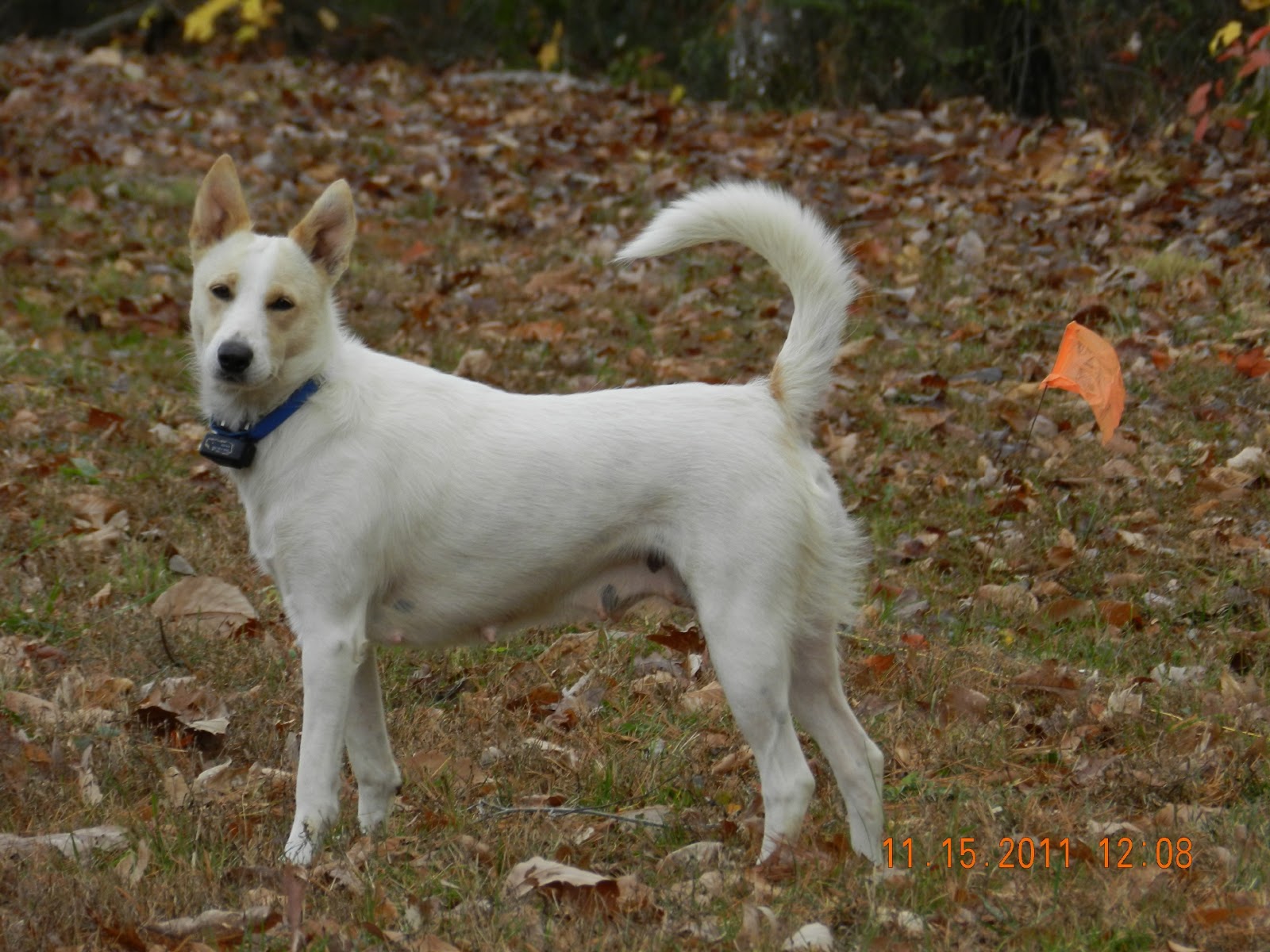
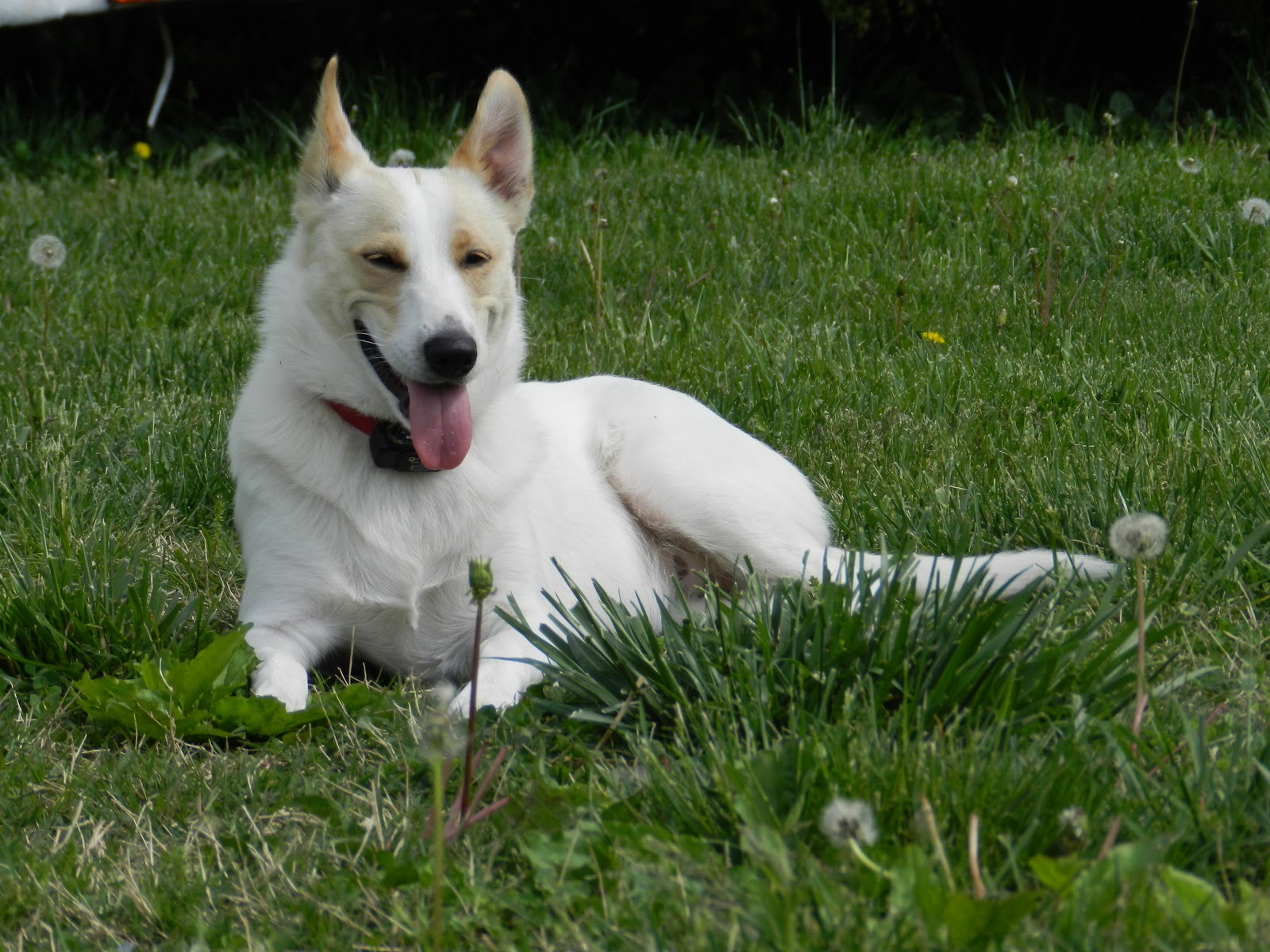
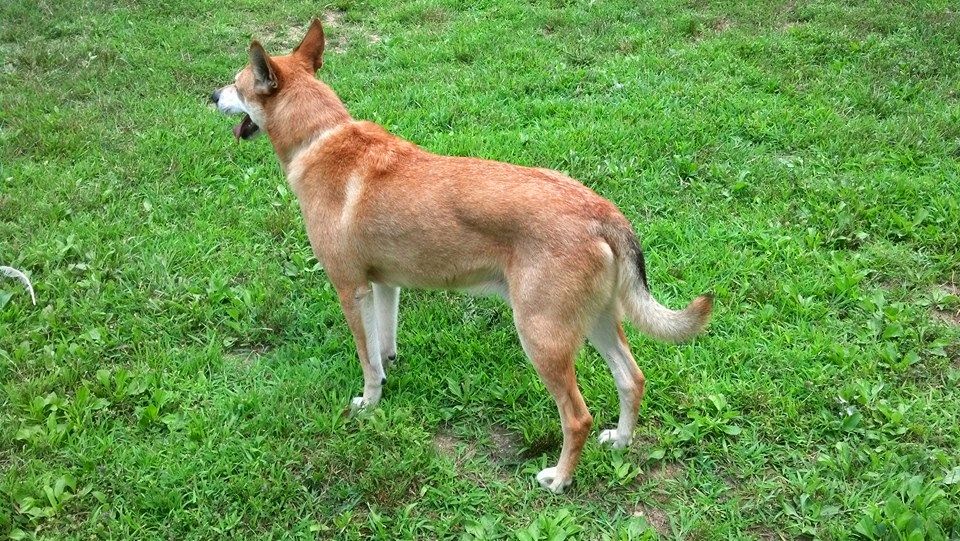
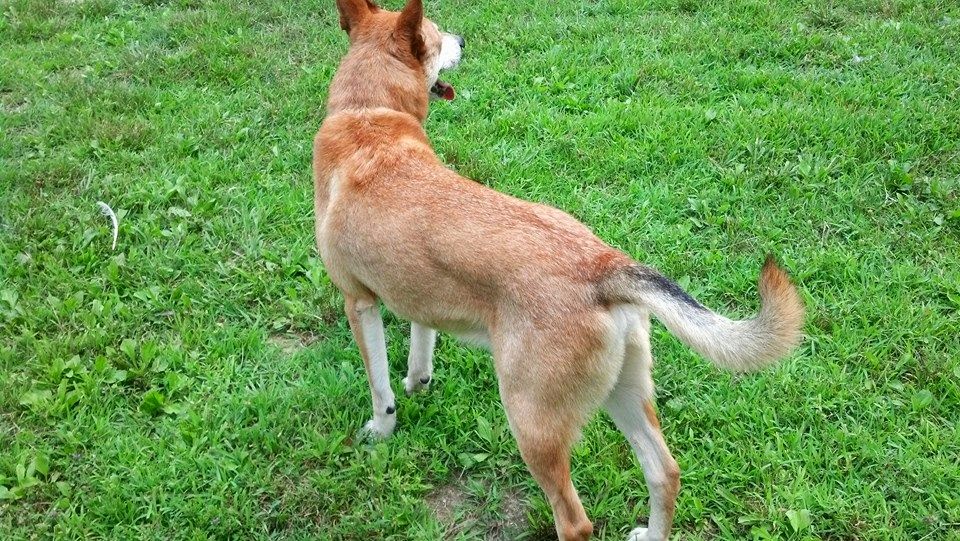
Welcome to my site about my Naturally Reared Carolina Dogs! Carolina Dogs are a relatively new, rare breed recognized by the UKC, AKC-FSS & ARBA, and are quite possibly America's own indigenous wild dog. CDs make wonderful companions, athletes, hunters, and bedwarmers! Natural Rearing is the philosophy wherein we raise our dogs and puppies by following the 8 Laws of Health, employing Biologically Appropriate Raw Food and no toxic chemicals on, in or around our dogs. We have found this way of life fosters balance, health and longevity in our beloved companions. For our puppies, we welcome homes that have a very similar philosophy about dog rearing, or wish to learn. Check us out, follow us and share us in other places!!! YouTube@ Susan NaturesWayCarolina Dogs NaturesWayPets and FaceBook @ https://www.facebook.com/mycarolinadog on Twitter @https://twitter.com/NaturesWayCDs Thank you so much for visiting our site, feel free to leave us a comment or send us an email! susanlewelling@yahoo.com

Tuesday, September 16, 2014

Is The Carolina Dog Native To North America? New Science Says: Maybe
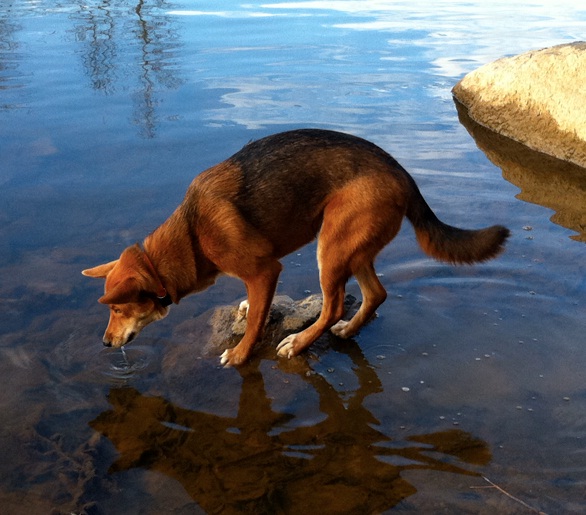
Is The Carolina Dog Native To North America? New Science Says: Maybe

Pittsboro resident Marielle Hare owns a dog, Oona, that she believes might have traces of Carolina Dog in her. She is interested in testing its DNA.
Credit Marielle Hare
The first Carolina dog that I. Lehr Brisbin took home with him smeared fecal matter all over the back seat of his car. He found her at a pound in Augusta, Georgia in the 1970s, and despite strong discouragement from the pound’s staff (they said she bit everyone who touched her), he managed to wrangle her into a carry crate in his back seat, where “she immediately had a diarrhea attack,” Brisbin recalls. But he was far from discouraged.  Brisbin wanted to take her home because he thought there was something strange and special about her. She resembled some wild dogs he’d seen in the woods along the Savannah River. And Brisbin was starting to put together an exciting hypothesis about why there were wild dogs in the South Carolina lowland that looked and acted different from most others.
At the time, I. Lehr Brisbin was a biologist studying wildlife at the Savannah River Ecology Lab, a field research station of the University of Georgia in Aiken, South Carolina. His research often took him into the 300 square mile wilderness of the Savannah River Ecology site. That’s where he first noticed the wild dogs.  They had long, pointy snouts, ears that permanently stood up and tails that curled back on themselves.  And their behavior, he noticed, was unusual, too. They dug small pits in the ground with their snouts. They hunted in packs and signaled to each other by flashing the white undersides of their tails. They moved as a pack, like wolves.  They were more like Australian Dingoes than European-bred dogs brought to America by colonists.  Brisbin hypothesized that the wild South Carolina dogs descended from canines that belonged to Native Americans, that the dogs’ ancestors had crossed the land bridge between Asia and North America with humans around 12,000 years ago.
Brisbin soon acquired another wild dog that resembled the female he got from the pound. He bred them, and their offspring “were like little dingoes,” he said. He joined the Australian Dingo Society to learn more and was struck by the similarities he saw in their behavior.  Brisbin decided to petition the United Kennel Club to get the dogs classified as a breed unto itself. His case convinced the UKC and a new breed was named.
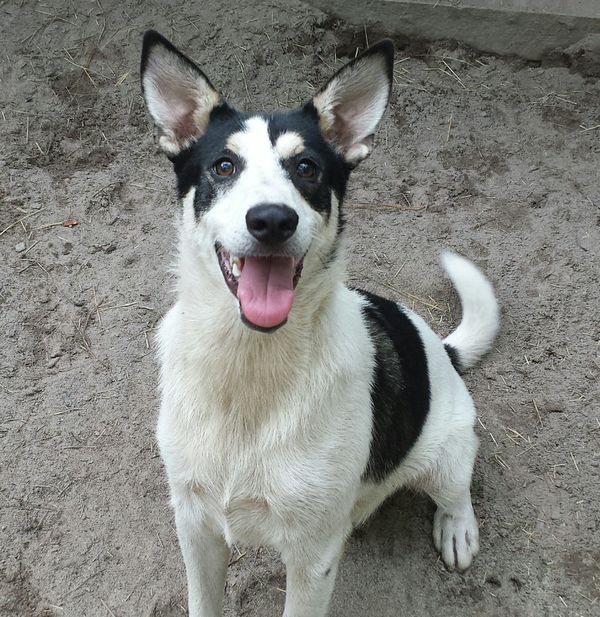
Pi, a Carolina Dog belonging to I. Lehr Brisbin.
Credit D. B. Brisbin
“I created the ‘Carolina dog,’” Brisbin says.  “And I based it on three things: First of all, what do you look like; second is how to do you behave; and third, where did you come from. Every one of those dogs traced back to the swamp dogs.”
Brisbin thought that the distinct morphology and behavior were strong indicators of a difference in origin from most domestic dogs in America, whose lineage can be traced to dogs brought over from Europe. The main question he wanted to answer was: are these dogs feral escapees with European origins? Or are they actually remnants of an ancient Native American dog population?
“We actually have a tool to find out,” Brisbin says. “It’s called DNA.”
Fast forward almost 40 years and a group of scientists from the Royal Institute of Technology in Sweden has subjected that hypothesis to a new level of scrutiny by analyzing DNA from 19 Carolina dogs and comparing it to other breeds. While Brisbin and other biologists have looked at the DNA of the Carolina dog before, the new study, whose results were published in Proceedings of the Royal Society B, is the first to compare Carolina dog DNA to a range of other breeds from North America and Asia to see which they most closely resemble genetically.
The researchers found that the mitochondrial DNA (which is passed down through females) of the Carolina dogs is most closely related to the mitochondrial DNA of dogs found in Asia, and they suggest, based on that evidence, that the Carolina dog “may have an indigenous American origin.” The key word there is “may.”
For enthusiastic Carolina dog owners and others following the story (a recent New York Times article about the findings was titled “DNA Backs Lore on Pre-Columbian Dogs”), these findings have been taken as strong evidence of native American dog.  But some scientists who study canid diversity aren’t as quick to accept the study as proof of the dog’s American origin.
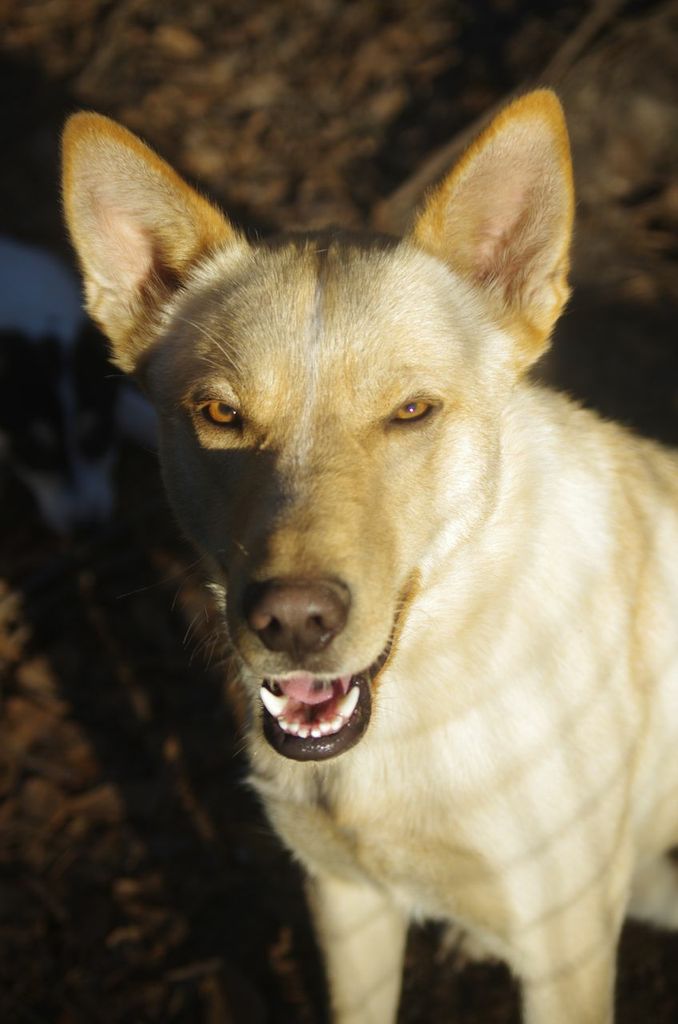
Bishop, a ginger-colored Carolina dog belonging to I. Lehr Brisbin.
Credit D. B. Brisbin
“I don’t think they really have enough evidence to support that,” says Ben Sacks, a professor at the University of California-Davis who studies dog genetics. “I think they have some circumstantial evidence that suggests that that’s a possibility.”
Sacks says that the work is exciting, but there’s still a long way to go to determine the origin of the Carolina dog.
“It’s a neat story, and maybe it is a remnant [American] population, but even if that’s the case, the odds that they've been able to retain their genetic integrity for the last five to six thousand years while being surrounded by European dogs and haven’t interbred is not impossible but would certainly be remarkable.”
Sacks also points out that the authors of the paper looked at only mitochondrial DNA (mtDNA), one piece of an animal’s genetic makeup. Although they compared it with the mtDNA of other dogs around the world, Sacks explains that  “the problem is, the similarity of mtDNA sequences doesn’t take you that far,” meaning that because of the way mtDNA mutates over time, it’s difficult to determine a relationship based on similar mtDNA sequences.
While Sacks is quick to admit that the work is exciting, he says comparing the entire genome of the Carolina dog to others will provide a fuller picture of its history and relationship to other dogs.
The paper’s lead author, Peter Savolainen, agrees that more work needs to be done. “I think we have a very strong indication, but it needs ‘final confirmation,’” he writes.
"I think we have a very strong indication, but it needs final confirmation." - Peter Savolainen
Even Brisbin, who would like very much to be able to say with certainty that the dogs have been in America since before Columbus, agrees that the genetic work is not quite where it needs to be to declare the Carolina dog indigenous.
“The evidence isn’t there yet, but it’s very exciting,” he says. He stands by his hypothesis and uses other clues –like Native American cave paintings that depict dogs similar to the Carolina dog and accounts from early European explorers in American who describe a dog like the Carolina dog—to give weight to his hypothesis as well.
It has been nearly 40 years since Brisbin first noticed the strange dogs in the swampy South Carolina forest. He is officially retired, but his interest in Carolina dogs and other wildlife hasn’t waned a bit. In his spare time he raises Pitt bulls and researches the ancestry of the domesticated chicken; he testifies in court about dogs’ ability to track scent; he sometimes raises blood hounds for the local police department. And he still breeds Carolina dogs.  Brisbin wants—possibly more than anyone—to see strong evidence for his hypothesis. But he’s still waiting for the study that can provide it.
“The new paper is exciting,” he says. “But other questions must be answered first.”

Tuesday, September 2, 2014

Puppies Due Soon!

We are proud to announce that we are expecting a litter of puppies from Daisy & Eli!!!   The estimated due date is October 8, 2014.


We expect 5-7 puppies. These puppies will be Naturally Reared, and five already have waiting homes that will continue the natural path with them for life. 

If there are more puppies, more applications will be considered, and I can take applications now to be put on a "standby/wait" list, if you think you would be interested in adding a happy healthy naturally reared Carolina Dog to your family!

We would like to invite you to follow their journey with us as they grow. You can find us & follow the pregnancy, whelping, & rearing via the following venues: 

Monday, September 1, 2014

Time 4 Dogs: DON'T Spay or Neuter Your Pets!

Time 4 Dogs: DON'T Spay or Neuter Your Pets!: We shouldn't be listening to the Bob Barkers of the world. Two significant new studies were released in 2013 on the adverse health eff...

Saturday, July 19, 2014

Tattooing Information.

My Tattooing page

Tattoos for Pet Identification

th              We all want to keep our pets safe and to do what is best for them. But what if in some freak accident they get separated from us and end up being found by a stranger or picked up by Animal Control? My dogs are smart but sadly they can’t talk well enough to be able to tell their rescuers my name, address and cell phone number.  So just in case, they do need some form of permanent identification that will enable someone to easily know who to call to get them back to me! I have helped with a CD rescue for several years, so I am aware of how many dogs end up in shelters for various reasons. Many people now days are opting for the microchip implant for pet identification.

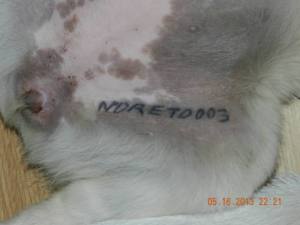
Besides being a Naturopathic Carnivore Nutrition Consultant, I am a Natural Rearing breeder of Carolina Dogs. So I am cognizant of the many concerns about the ID microchip implant that havebeen recognized in the past several years, failures, migration of the chip, not to mention the health issues that are related to this product.
FDA-IDENTIFIED POTENTIAL HEALTH RISKS:
Adverse Tissue Reaction
Failure of Electronic Scanner
Migration of Implanted Transponder
Electromagnetic Interference
Compromised Information Security
Electrical Hazards
Failure of Implanted Transponder
Magnetic Resonance (MRI) Imaging Incompatibility
Failure of Inserter
Needle Stick
There is a site that has compiled tons of information about ID micro-chips for pets. Rather than try to put every thing here I would rather you explore the site yourself.
*****   http://www.chipmenot.org/index.htm   *****
I do share many of these concerns, so I have chosen to ID my dogs with tattoos. While not completely without risk of allergic reaction or possibility of fading, I feel that the ID Tattoo is the best and safest  option for permanent pet identification.NDR2logo
National Dog Registry is the #1 pet tattoo registry in the US. This is the organization with which I register all my dogs and puppies. Also I am an authorized tattooer with the NDR.  I am the only NDR authorized tattooist in the East Tennessee-Knoxville-Tricounty area.  http://www.nationaldogregistry.com/
428456_4928128409080_27784728_n
Tattoo Procedure
Tattoos are done by appointment only, in the dog/cat’s home.  I advise allotting a minimum of 1 hour for one pet  and an additional 30 minutes for each additional one. I do prefer to take my time so the pet stays calm and the tattoo is done well.  I need a table or other surface or possibly a couch,  where we can easily situate the pet, and  have work area and maneuvering area, as well as room for the person holding/securing the dog on its side/back while I work.  After set up and the pet getting comfortable with me, a tattoo usually takes 10-20 minutes depending on how cooperative the pet is. It may help to wrap the pet firmly in a towel/blanket/sheet to help keep them still during the tattoo. I prefer to diffuse calming essential oils, during the tattoo. I only use Young Living’s therapeutic grade essential oils, for the health and  safety of people and pets.  I also recommend giving the pet a dose of Bach’s Rescue Remedy-Pet 20 minutes before the appointment time. This is a safe homeopathic remedy that I have used many times. You can find RR at local health food stores or online(Amazon). RR does not sedate your pet it just helps them to be calmer and more accepting of stressful situations.
Tattooing does not hurt your pet, and does not bleed like a human tattoo. Please go to the National Dog Registry website for more information on this as well as information regarding the tattoo procedure.  I tattoo on the groin/inner thigh area, to decrease the likelihood that any unscrupulous person would attempt to remove the tattoo. If you have a different specific area you would like the tattoo placed, we can discuss that during our conversation. I use a pen-like animal marker, not a clamp tattoo system. I feel this works better and the machine I use is light and easily maneuverable and less scary for your pet.  Basically there is no follow up care needed, except to keep an eye on the area and keep the fur clipped short in the tattooed area of you have a pet that has longer fur that requires grooming.
I am proud to announce I will now be using Skin Candy brand Ink!
APB__37578.1405466000.1280.1280Skin Candy Ink  has come highly recommended to me for its color and safety. I use the Bloodline All-Purpose Black ink. If you would like a different color, there may be an additional charge because I would have to order & purchase that color. Here is the MSDS for the Bloodline A-P Black ink.  https://www.skincandy.net/pages.php?pageid=17

My basic charge is $15.00 per pet,  but a really difficult pet that takes much longer will have an additional charge.  Keep in mind that my price is below the national average & I do drive to you. I do take tips but that is not expected nor required. For my payment I take Paypal or credit/debit cards or cash, no checks.
922715_4928129969119_731245345_n
The charge to register the tattoo through NDR is not part of my charge. NDR’s  lifetime tattoo registration fee is $45.00 for the first pet, $20.00 for each additional pet.   You can now fill out  the forms and pay NDR online or print the form and write a check to NDR directly and I can mail that in for you. If you do not register your tattoo it will be virtually useless in getting you reunited with your pet if he/she should become lost, so I HIGHLY recommend doing that immediately.
375156_4928130249126_2140753822_n                                       919054_4890297063320_554333138_o

Cooter's was the first tattoo I ever did on a live being, I am not happy with it & will be touching it up soon with my new Bloodline Black Ink. Also hair is not shaved so you can tell it is there but would have to shave it to read it.
Cooter’s was the first tattoo I ever did on a live being, This was done 2-3 years ago. I am not happy with it & will be touching it up soon with my new Bloodline Black Ink. Also hair is not shaved so you can tell it is there but would have to shave it to read it.
daisy 7-19
Daisy’s tattoo was the 2nd I ever did. It was done 2-3 years ago, this is upside down & with no fur shaved. you can see it is easily noticeable, but may need shaved to be able to clearly read it. I have learned so much since then about the lettering.
If you are interested in getting an ID tattoo done on your pet, please contact me 


Monday, July 7, 2014

NOW ACCEPTING APPLICATIONS FOR 2014 FALL LITTER, DAISY& ELI


Daisy & Eli getting to know one another. 

 FALL LITTER PLANNED. SUBMIT YOUR APPLICATION NOW TO GET IN ON THIS ONE TIME ONLY Daisy + Eli LITTER. 
Daisy

Eli
Eli is a male Carolina Dog owned by my friend Bill Schenck. He is UKC registered and originally hails from Banbury Cross Farm, but is a different line than Daisy or Cooter. 


Daisy
 I think that Eli will help improve our future line of Naturally Reared CDs. As you know, my goal is to raise healthy happy pups, that are true to the CD nature, looks and genetic diversity.


Eli


 Eli is not fully Naturally Reared, but being that CDs are a rare breed and finding a Naturally Reared CD is even rarer, I feel it is better for the male to be CR, than the female, if I must choose. Eli ticks all my other boxes which is why I agreed to mate him with Daisy, in order to keep a female puppy for the future. He is 9 years young and is a very handsome & friendly fellow. He enjoys running through fields, playing in the lake and chasing critters in the woods, as well as laying on his big fluffy bed at home in South-East Tennessee.  

The pups from this litter will of course still be Naturally Reared, Dam NR care throughout Pregnancy & whelping, weaned to raw, no chemical or vaccines on/in/around puppies. 
When Daisy comes into season, Eli will come & visit and hopefully we will have a beautiful litter of CD puppies 9 weeks later. 
Eli & Daisy hanging out
If you are interested in confirming your place on the list, please read the page "Interested In a Puppy". If you have not already done so, please email me a completed application and if approved be prepared to pay a $100 non-refundable deposit. You will not be considered "confirmed on the list" until you are approved & pay the deposit. Link to Application/Puppy Info .


Daisy

If you previously sent me an application and would like a puppy from this litter, please email me @ susanlewelling@yahoo.com & let me know that you are still interested & would like to place your deposit. 


Eli


Thank You!  I look forward to this endeavor and adding to our East Tennessee Dingo Family!


Daisy           


Friday, May 30, 2014

Books about Carolina Dogs

Here are some books, Fiction & Non-Fiction about Carolina Dogs that you may enjoy reading. 
****************************************************************
I recently saw a posting from someone on FaceBook about this book & I wanted to share it with others. It is a fictional book, with characters based on real situation & people & dogs.  


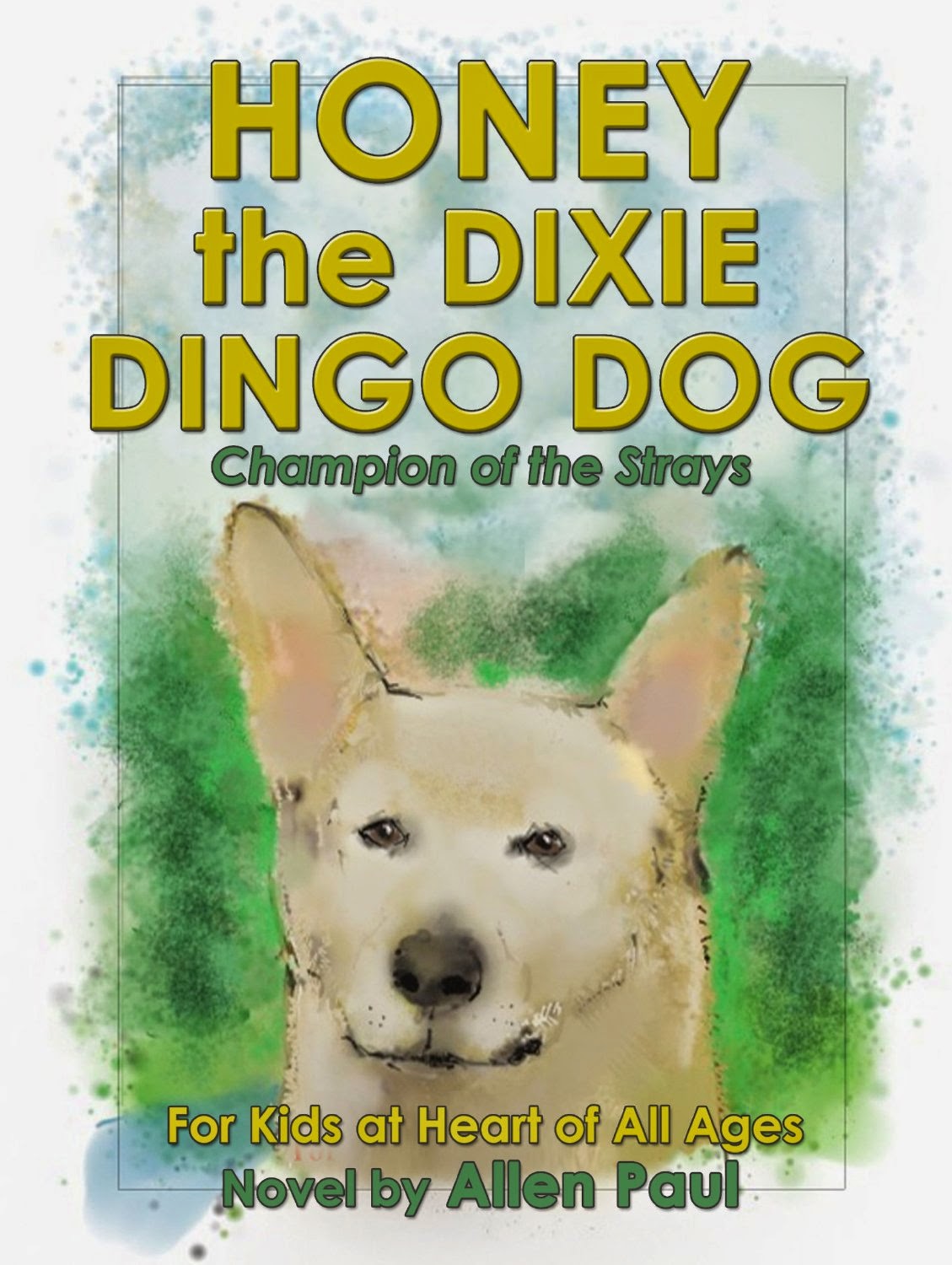
Bestselling and award-winning author Allen Paul has created an endearing character in Honey, a swamp dog who gets rescued at the moment she’s about to get shot. Taken to live at Banbury Cross Farm with other rescued Dixie Dingos, her quick cuts and darting turns soon draw notice; she’s then trained for agility championships, the most popular of all canine sports. 

From the start, Honey forms a deep bond with Miss Jane, who saved her in the nick of time. Her trainer is Ace, a worldly wise black man who manages the farm’s kennel. Honey forms another deep bond with Miss Jane’s partner, Mr. Billy, a skilled horseman who delights Honey by quoting famous rhymes. 

The story is told by Honey in a charming southern voice. She’s just turned one (equal to a 10-year-old girl or boy) when the story begins. At its center is a haunting mystery: Why are swamp critters turning up dead with a wild look in the eye? Many believe a big coyote named Geronimo scares them to death. When two dead dingo pups are found, Honey becomes convinced that her pack, which is still in the swamp, could be next. Somehow she has to get them out. 
Honey the Dixie Dingo Dog

****************************************
I have personally met Honeybun & Vicky. I Loved them!  Adorable Honeybun had her Southern Belle dress on when I met her :)  You will love this touching book about their struggles & triumphs. 

I’m Listening With a Broken Ear is a true story about a dying dog, Honeybun, the author found on a roadside and grudgingly rescued. A concomitant story of faith, persistence, and love unfolds as both she and her young daughter struggled to help Honeybun overcome severe issues of compromised health, aggression and fear. Untrained to deal with the overwhelming behavior, Vicky then tried to give her up.... unsuccessfully.
Refusing to relinquish her to Animal Control who would undoubtedly euthanize Honeybun,Vicky tripped upon a small rescue organization who offered to help rehabilitate Honeybun for free. During the many months of heartache and struggle, and multiple near deadly attacks on Vicky's other dog, she discovered a modern day parable of the truth that nothing is truly irredeemable. Each victory with the little rescue dog taught personal lessons in redemption and grace, patience and perseverance, and the power of transforming love to spread through a community in most unexpected and unlikely ways. 
There were multiple failures, and repeated surrenders to hopelessness.Each time, her weakness was thwarted and overcome by unexpected help and miracles. In the process, Vicky came face to snout with the harsh reality that real compassion involved action and responsibility. If she wanted to save the dog, ultimately it was up to her.
It is a story of redemption, physically and spiritually in a very small corner of the world, told through the story of a discarded dog that no one wanted and no one thought could be saved.
Donations to the animal rescue that helped save this dog can be made at hollowcreekfarm.org
I'm Listening With A Broken Ear
 ****
UPDATE 7-10-14
Vicky just released a new novel !

Available on Kindle & in print.

Link to Amazon http://www.amazon.com/dp/B00LNA7T4G

Book Description

 July 8, 2014
A lonely, discouraged woman is beckoned to a small town to care for her dying, despicable father. At the same time, the town is reeling from the first murder in a hundred years, devastating their peaceful community. In this inspiring story of redemption, a pack of wild dogs of an ancient and rare breed bring about healing, and a surprising solution to the murder mystery. A book for dog lovers, God lovers, and mystery lovers alike, with a hint of romance for everyone else.

****************************************
This is a book I own and have read many times. It can be bought from Ms Gunnell herself. 
The true story of Jane Gunnell's remarkable adventures in rescuing the Carolina Dog from inevitable extinction is a delightful romp that will please old and young alike


Ordering Information:
Each book is $28.00 plus $10.00 for shipping and handling
Make Checks Payable to : Carolina Dogs

262 Eastgate Drive #342
Aiken, SC 29803
Thank you for your interest in and support of The Carolina Dog.

Our New Book


This book is written by Ms Jane Gunnell about her personal experiences with  Carolina Dogs and all she has learned about them through the years.  It is informative as well as interesting and has lots of great tips for raising a Carolina Dog. 
**********************************************************************
 If you know of any other books about Carolina Dogs please post a link on the comments. 

Monday, April 14, 2014

American Dog Breeds Hail From Pre-Columbian Times

American Dog Breeds Hail From Pre-Columbian Times

Savolainen said, "What surprised me the most were the Carolina dogs," which look like dingoes or Asian village dogs. A previous researcher suggested the Carolina dog might be indigenous to America, but most people didn't believe him.

But the team's genetic analysis found that Carolina dogs share a unique genetic marker called A184 that hasn't been reported before. And A184 belongs to a group of genetic markers specific to East Asian canines.

Thursday, March 20, 2014

Now Taking Applications

I would like to plan a fall 2014 Cooter/Daisy litter.

If you are interested in confirming your place on the list, please read the page "Interested In a Puppy". If you have not already done so, please email me a completed application and if approved be prepared to pay a $100 non-refundable deposit. You will not be considered "confirmed on the list" until you are approved & pay the deposit.
Thanks. I look forward to this endeavor and adding to our East Tennessee Dingo Family!


Sunday, January 26, 2014

factsheet from University of Georgia, Savannah River Ecology Labratory

Primitive Dogs of the Southeast

dog.gif (41059 bytes)When the first primitive humans crossed the Bering land-bridge into North America from Asia, they were accompanied by a primitive form of dog. The animals resulted from the domestication of southwest Asian wolves in the region of Iraq a few thousand years earlier. These small, non-descript dogs moved quickly with their human companions down through the western part of North America. Skeletal remains and mummified bodies of these dogs have been found along with artifacts from primitive Southwest Indians.
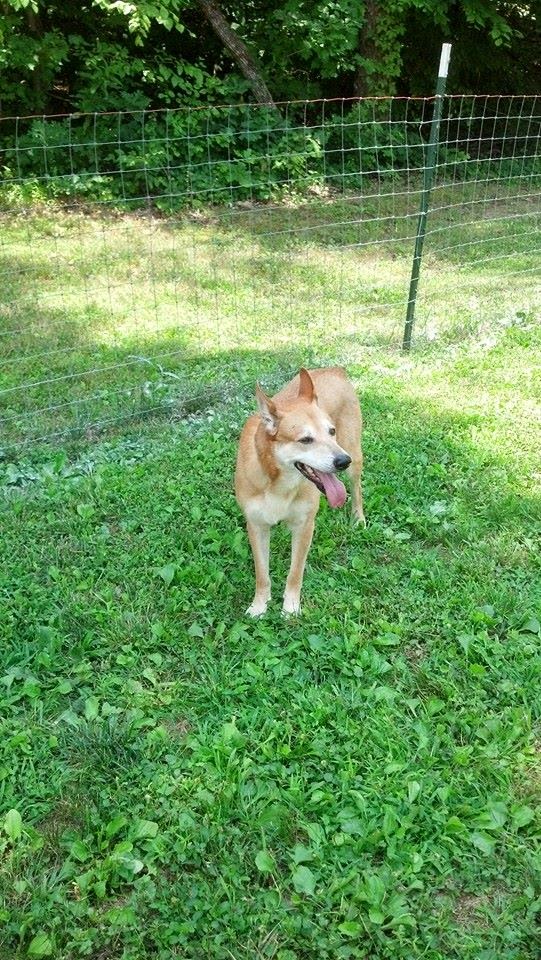
From the Southwest, these primitive dogs moved into the eastern United States. Archaeological investigations have indicated their presence in the southeastern forested woodlands. There they were companions of the Indians of the Southeast long before the arrival of the first European explorers of the New World.
Recent studies of free-ranging dogs in parts of South Carolina and Georgia have revealed the continued existence of medium-sized, foxlike primitive dogs. Their appearance, as well as behavior and general ecology, suggest a close ancestry - if not direct descent of type - from the first primitive dogs to enter North America more than 8,000 years ago.
Called the "Carolina Dog," these animals most closely resemble Australia's Dingo, which may indeed be among their closest living relatives. Scientists suggest that the striking resemblance between Carolina Dogs and the Dingo stems from the way in which both animals have filled a free-living, or "pariah," niche, on the fringe of human civilization and culture.


Free-ranging Dogs of the Savannah River Site

Long-term studies of foxes, bobcats and other fur-bearers on the U.S. Department of Energy's 310- square-mile Savannah River Site (SRS) near Aiken, S.C., have revealed the presence of Dingo-like, free-ranging dogs. Their appearance suggests a loose resemblance to the primitive Carolina Dog body type described above.
In the late 1980s, scientists from the Savannah River Ecology Laboratory brought these dogs into captivity from public lands bordering SRS and other large tracts of protected natural habitat, such as the U.S. Army's Fort Gordon in nearby Augusta, Ga. Studies of the dogs' behavior under semi-free-ranging conditions in a captive breeding program have revealed unique behavioral traits. These traits had never before been described in any form of domestic dog or wild canine species.
One of the most unusual of these traits is the tendency for some of these dogs to ritualistically cover their droppings with sand. But they only do this during certain seasons of the year or phases of the reproductive cycle, such as when females are nursing puppies.


Towards the Development of a New Breed

Offspring born in captivity to wild-caught Carolina Dogs - when properly socialized from an early age - have proved adaptable as family pets under a wide variety of household conditions.
Ecology Laboratory senior researcher Dr. I. Lehr Brisbin has established a studbook for these animals. Also, both the American Rare Breed Association and the United Kennel Club have recognized the Carolina Dog breed registry. Now, the dogs' versatility and trainability is being demonstrated in show ring competitions, suburban homes and farmsteads.
http://srel.uga.edu/outreach/factsheet/carolinadogs.html

2013 Article from The Bark

Why the Transformation of Wolves to Dogs Remains a Puzzle
The more I consider the continuing debate over the “time” and “place” for the transformation of wolf into dog, the more I become convinced that the puzzle remains unsolved because of human devotion to a simplistic, clever-sounding idea that never made sense in the first place. As first put forth by Raymond Coppinger, that idea was that wolves feeding on the garbage piles of quasi-permanent Mesolithic villages grew tamer over the course of generations until they no longer feared or threatened humans. In the process of taming themselves, those wolves also became less fearful of and aggressive toward humans. They were cute, too. For reasons that were never clear to me, people took these cute obsequious dump divers into their homes, where they blossomed into dogs. 
Coppinger pinned his argument on Dmitry Belyaev’s experiment, begun in 1959, at a Siberian fur farm, in which a group of foxes was bred for tameness alone and within ten generations was producing foxes that resembled dogs with floppy ears, piebald coats, and a high need for attention. They were juvenilized in behavior as well as appearance.
There are a number of reasons why the foxes are not a good model for origins of the dog, and I have elsewhere addressed them in detail.  For now, suffice it to say that dogs arose not in quasi-permanent Mesolithic villages but in Paleolithic hunting camps.  They were not sought nor selected because they solicited attention and showed no aggression—these are hardly traits of a good guard, which was one of the tasks of early dogs.  Guarding remains a major reason why people keep dogs.
But the greatest problem with the self-domesticating theory is that it shuts the most creative creature on the planet out of the process. To put it bluntly, that makes no sense.  Humans have always collected, tamed, and trained animals. It is inconceivable that they would ignore one as intelligent and inquisitive as the wolf.
Genomics and its offspring have shown that living organisms are not biological machines but energetic systems supported by layers of complexification. Genomics has also contributed to a more dynamic view of “domestication” as a process involving the interplay of biological, environmental, and cultural forces. The hard line between “domestic” and “wild” –always imaginary but not less real for that—has for the dog become increasingly difficult to find despite the distortions that define the current period of breedism.  I am using “breedism” to refer to all aspects of the cult of the purebred dog that began to take hold about 200 years ago.  Of course, there are significant differences between dogs and wolves, when they are in their own environments, but what happens when the dog goes native or the wolf becomes a lay-about?
It sometimes appears that every new find simply raises new questions while leaving old ones unresolved.  That trend is apparent in two new papers by Ya-ping Zhang, a leading Chinese geneticist, who collaborated with geneticists from China and two different labs in Sweden and California on two new papers promoting Chinese indigenous dogs—native or village dogs—as the closest dogs to the ancient type.
Working with Peter Savolainen, of Sweden’s Royal Institute of Technology,  Zhang has over the past decade or so insisted that dogs originated in southeast China no earlier than 16,000 years ago, and many researchers elsewhere adopted his argument despite the notable absence of dog or wolf remains from that region at that date and the presence of dog remains from other places considerably earlier. 
The researchers redid the numbers using new chips that spot changes in the genome including so-called single nucleotide polymorphisms, or SNPs, and indels—insertions or deletions of small amounts of genetic material.  SNPs and indels can be used to measure degrees or years of separation of discrete groups of organisms.  Crunching the numbers and running regression analyses, they found that southeast China village dogs separated from wolves 32,000 years ago.  There were a lot of them by then, too, they reported in an article in Nature Communications [subscription required], with Guo-dong Wang and Weiwei Zhai as first authors and Zhang as senior author—8,500 dogs by their estimate.
The new date fits nicely with some “early dogs” identified from the Altai Mountains, Belgium and the Czech Republic, although Zhang and his colleagues are not quite willing to admit that those animals are dogs.  In fact, they appear to want to deal with the early date by using it to mark the beginning of a long period of self-domestication for a group of scavenging protodogs.
Zhang’s group declares: “Early wolves might have been domesticated as scavengers that were attracted to live and hunt commensally with humans. With successive adaptive changes, these scavengers became progressively more prone to human custody. In light of this view, the domestication process might have been a continuous dynamic process, where dogs with extensive human contact were derived from these scavengers much latter [sic] when humans began to adopt an agricultural life style.”
The operative words here are “commensally” and  “scavenger.”  Together, they say that wolves were drawn to human garbage or some other waste and so started hanging around and hunting with them but without having a discernable effect or bringing them any benefit—thus, the term “commensally”—until the biped started farming. Then the scavengers showed their true worth as crossover omnivores and became dogs.
That is not complex, but it is convoluted. At a basic level, it is not clear why protodogs could not have arrived in southeastern China from the Altai Mountain region, for example, where the people who would come to enter the New World and spread through much of the Old World as the glaciers began to retreat, had gathered, presumably with dogs some 35,000 years ago.  A population of dogs and people could easily have gotten to southeast China and radiated outward from there.  The much trumpeted diversity of dogs in the region could be a result not of their origins there but an accident of geography and history, including intensive breeding of dogs for food and a settlement pattern that featured many small riverine villages along the Yangtze River, one of the world’s largest.
Zhang’s defense for the lack of wolves in southeast China is that wolf populations have changed everywhere, and so no one has an ancestral wolf for study and comparison. But the Chinese indigenous dogs and a couple of related breeds, are the dogs closest genetically to wolves, and that makes them all the more important as living artifacts, Zhang and his team reason.  Specifically, they looked for genetic loci that might show positive selection pressure in dogs and humans and therefor might represent parallel evolution in the two species. The genes they identified as likely candidates are involved in diet, specifically the ability to digest grains; metabolism; cancer and neurological processes, especially some involving the neurotransmitter, serotonin. 
Zhang is also corresponding author with Dong-Dong Wu, both of the Kunming Institute of Zoology, Chinese Academy of Sciences, Kunming, China, on a Molecular Biology and Evolution paper involving the laboratory of Robert K. Wayne, dean of canid evolutionary biologists, and several of the next generation of dog geneticists who have already published important work—Bridgett vonHoldt and Adam Boyko.  They were especially focused on the prefrontal cortex and on parts of the brain that appear involved in fear response and sociability.
I say “sociability”, but, following Zhang’s lead, the researchers on these pages say “tameness,” while continuing to cling to the Soviet fox experiment as evidence that the dog was self domesticating, becoming obsequious and ingratiating and nonaggressive while eating garbage and offal.  Standard descriptions of this work are abundant, and I won’t repeat them here.   But it is fair to say that grand pronouncements about the working of the brain must be treated cautiously.
Most of these searches for genes involved in the transformation of wolves to dogs are based on at least two significant, faulty assumptions about the behavior of dogs and wolves.  The first faulty assumption Is that wolves are now, and were in the late Pleistocene, aggressive competitors with humans.  There is evidence documenting not only friendly but also mutually beneficial relationships of humans and wolves going back thousands of years.  There are suggestive associations of wolf and Homo erectus remains going back hundreds of thousands of years.
The second faulty assumption is that a group of wolves effectively said to humans, “Because we like your leavings so much, we will stop vying with you and aggressing against you. We will be abject before you if you will give us excretia to eat because we cannot live by ourselves.”  The question I always ask is, would you want such a creature in your house, in your bed? That is unlikely.  This assumption is faulty because there is no evidence that wolves generically dislike or even fear humans.  The global wolf recovery with wolves living in ever closer proximity to humans proves that wrong.  It is humans who hate wolves. 
That wolves and humans, similar as they are in so many ways, should make common cause, should surprise no one.  Hunters study hunters.  Species cooperate.  It would be more aberrant if they did not.  Coral groupers, Napoleon wrasse, and moray eels were recently shown to hunt cooperatively, for example. Around the world, hunting cultures had dogs that often interbred with, sometimes were indistinguishable from wolves.  In the New World and elsewhere that situation was contemporaneous with the rise of multiple refined breeds in the Anglo-English speaking world.
In a real sense, then, what we call domestication of the wolf was really a rolling and flexible bringing into human culture of wolves who had the psychological and emotional capacity for sociability, for forming strong bonds not just with another individual but also with another species. 
Some years ago Adam Miklosi and his colleagues compared hand reared wolves to dogs.  The lengthening of the first critical socialization period and a greatly increased capacity to form strong bonds to another species were clearly central to the appearance of the dog, they concluded.
Yet for all of their problems, these two new studies are useful for their focus on indigenous dogs, the landrace dogs who although they might have several uses are generally not bred by humans to any purpose, but who still live, reproduce, and die in human society.  How ancient or basic these dogs are is not really known. But they are found around the world, and I think that comparative studies of them and resident wolves and truly self-sustaining feral dogs, where they still exist, will prove most interesting. The same applies to comparison of DNA from ancient dogs and wolves. We do not yet see them clearly.